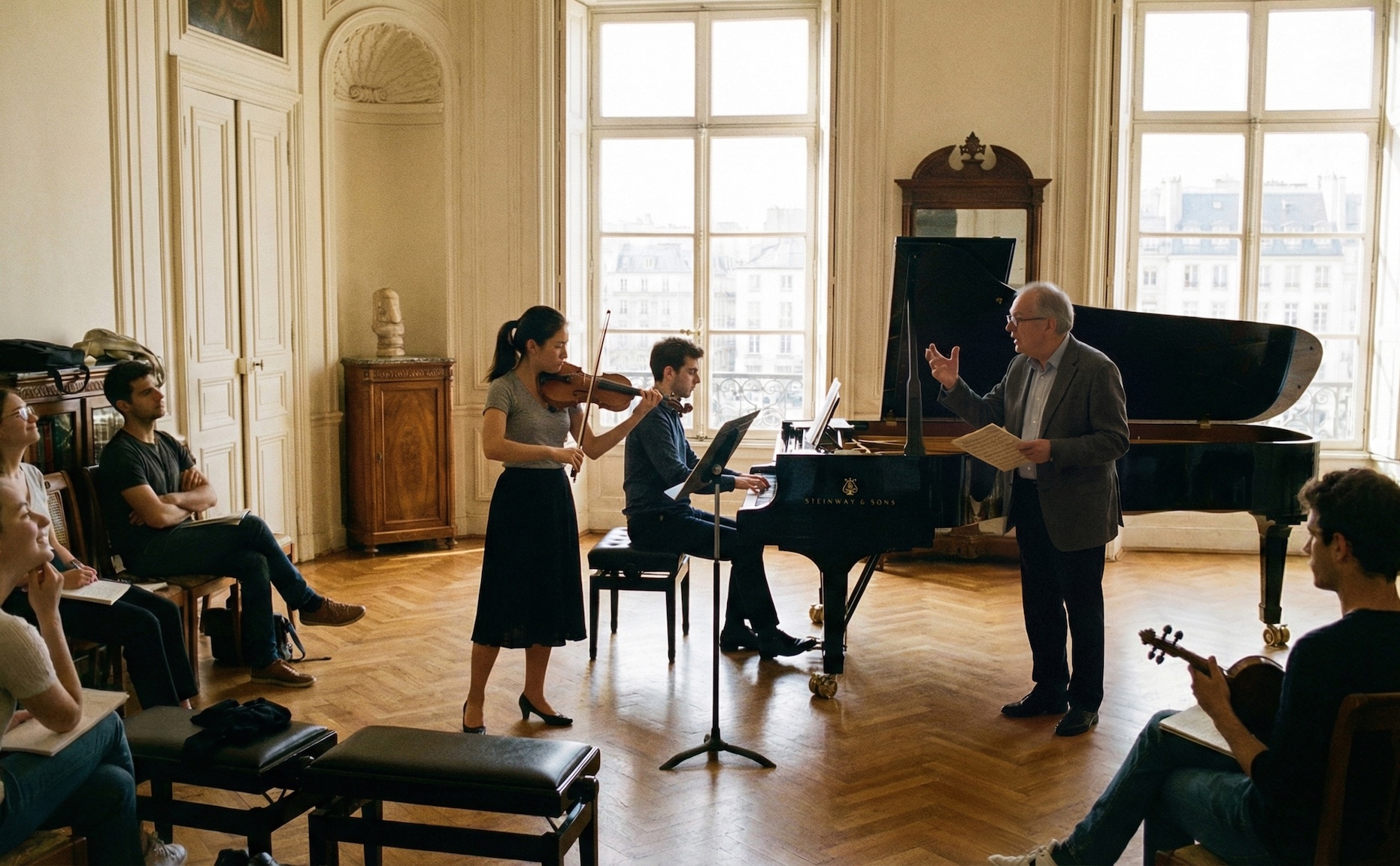
Arco records every music lesson and writes it up in detail. Teachers stay present, with far less admin. Students remember last week’s advice, or rediscover wisdom from last year.
Then ask Arco anything: it answers from every lesson you’ve ever had, and connects them to reveal insights across time.
For every instrument, in any language. On iPhone, iPad, and the web.
Then focus on the lesson. Arco captures every explanation, demonstration, and assignment in the background, ready for notes, search, and follow-up.
No more scribbling mid-lesson. You teach, your student stays present, and nothing said is lost.
On iPhone, iPad, or the web. Records with the screen off, even offline. Or import audio and transcripts you already have.
LESSON NOTES
Every lesson becomes a pedagogical document.
A lesson isn’t a meeting. It stops mid-phrase, jumps to a demonstration, and circles back for another try. Arco is built to follow that flow and understand the music, technique, and repertoire within it. The result: Lesson Notes written for the practice room, not meeting minutes.
Richer than notes you could take while teaching, with names, works, and terms spelled right.
Remix turns Lesson Notes into a concise student version, a parent-friendly recap, or a quick review. Arco translates Lesson Notes into any language instantly.
YOUTHSimpler words and clear practice goals a younger student can follow alone.
PARENTA guide for parents, even non-musicians: what was taught and exactly how to help your child practice at home, without sitting in or taking notes.
SPACES
Teacher and student, in sync.
Send Lesson Notes as a polished PDF, or invite your student to your Space with a link. Then, every lesson recorded there automatically lands in both libraries, with Lesson Notes, audio, and transcript.
No admin. The notes and recording reach your student and their parents automatically.
ASK ARCO
Ask about your lessons, or your sheet music.
Recall what was said in any lesson, ask for a broader musical perspective, or photograph a passage for practice suggestions.
“My vibrato sounds tight and mechanical. What can I do?”
“What fingering did my teacher recommend for the Chopin Ballade?”
“What were Sarah’s major wins and challenges in the past year of lessons?”
“How can I practice bars 45–50 from this page?”
JOURNAL
The journal you already keep.
You write these things down anyway: in a notebook, on your phone, in a voice memo on the drive home. Journal brings that habit into Arco.
A thought about a student, a breakthrough in the practice room, something that still feels stuck. It stays completely private: no other user, not even anyone in your Spaces, can see it. But Arco remembers. When you chat, it draws on your journal and your whole lesson history, so it really understands you.
SPACES · LESSON PLANS
Walk in prepared.
Open a Space and your recent lessons with that student are on one screen: what you covered, what you assigned, where you left off. One minute, and you’re caught up.
Arco helps plan the next lesson from past lessons and expert knowledge. From the same screen, create a polished, share-ready Progress Report that details progress over months and repertoire covered.
How Arco fits around a lesson.
IN THE LESSON
Just press record.
Then focus on the lesson. Arco captures every explanation, demonstration, and assignment in the background, ready for notes, search, and follow-up.
No more scribbling mid-lesson. You teach, your student stays present, and nothing said is lost.
On iPhone, iPad, or the web. Records with the screen off, even offline. Or import audio and transcripts you already have.
AFTER THE LESSON
Every lesson becomes a pedagogical document.
A lesson isn’t a meeting. It stops mid-phrase, jumps to a demonstration, and circles back for another try. Arco is built to follow that flow and understand the music, technique, and repertoire within it. The result: Lesson Notes written for the practice room, not meeting minutes.
Richer than notes you could take while teaching, with names, works, and terms spelled right.
Remix turns Lesson Notes into a concise student version, a parent-friendly recap, or a quick review. Arco translates Lesson Notes into any language instantly.
YOUTHSimpler words and clear practice goals a younger student can follow alone.
PARENTA guide for parents, even non-musicians: what was taught and exactly how to help your child practice at home, without sitting in or taking notes.
AFTER THE LESSON
Teacher and student, in sync.
Send Lesson Notes as a polished PDF, or invite your student to your Space with a link. Then, every lesson recorded there automatically lands in both libraries, with Lesson Notes, audio, and transcript.
No admin. The notes and recording reach your student and their parents automatically.
BETWEEN LESSONS
Ask about your lessons, or your sheet music.
Recall what was said in any lesson, ask for a broader musical perspective, or photograph a passage for practice suggestions.
“My vibrato sounds tight and mechanical. What can I do?”
“What fingering did my teacher recommend for the Chopin Ballade?”
“What were Sarah’s major wins and challenges in the past year of lessons?”
“How can I practice bars 45–50 from this page?”
BETWEEN LESSONS
The journal you already keep.
You write these things down anyway: in a notebook, on your phone, in a voice memo on the drive home. Journal brings that habit into Arco.
A thought about a student, a breakthrough in the practice room, something that still feels stuck. It stays completely private: no other user, not even anyone in your Spaces, can see it. But Arco remembers. When you chat, it draws on your journal and your whole lesson history, so it really understands you.
BEFORE THE NEXT LESSON
Walk in prepared.
Open a Space and your recent lessons with that student are on one screen: what you covered, what you assigned, where you left off. One minute, and you’re caught up.
Arco helps plan the next lesson from past lessons and expert knowledge. From the same screen, create a polished, share-ready Progress Report that details progress over months and repertoire covered.
Useful from the first lesson.Better with every one after.
JAN
FEB
MAR
APR
MAY
SEP
ARCO
LESSON NOTES
Barber Concerto · All Movements
STUDENTSebastian
DATEFebruary 19, 2026
DURATION01:33:56
THIS LESSON
– Barber Concerto — movement 1
– Barber Concerto — movement 2 opening
– Barber Concerto — movement 3 articulation and stroke
– Progress: vibrato, phrase line
I
Keep the sound alive all the way through
The main idea across the lesson was not letting notes die before the next event. The teacher kept returning to this in different forms: vibrato should keep living through the line, shifts should either be hidden or clearly expressive, and the bow should keep carrying momentum instead of restarting the sound.
In the first movement opening, the vibrato was praised as richer and more connected to the music. The adjustment was to avoid a stark switch from non-vibrato to vibrato: let it “blossom” organically. The phrase should feel like one wave, with momentum already prepared in the up-bow instead of suddenly waking up the bow.
A few concrete reminders came up repeatedly:
– Intensify into the arrival, especially the D to E motion
– On slides, do not stop the vibrato first; otherwise the shift sounds clinical
– If a shift is audible, either hide it or make it clearly expressive, even “Kreisler style”
– Never stop the bow in the middle of an expressive gesture
ARCOPAGE 1 OF 3
ARCO
Progress Report: Sebastian
STUDENTSebastian
PERIODMar 2026 – Sep 2026
LESSONS5 lessons
Sebastian — Progress Report
April–September 2026
Sebastian’s lessons show a clearer, freer approach to bowing and phrase connection, alongside continuing work on tension, anticipation, and accuracy at speed. On April 2, the teacher explicitly heard more life and lightness in Sebastian’s playing of Mozart’s Fifth Concerto, with more room to shape its gestures. In September’s Sibelius work, changes to the bow motion produced a freer attempt, and Sebastian reported less effort and fatigue on the G string. These are meaningful observations, though the lessons do not establish that the same ease is yet reliable across all passages.
I
Development and current work
Connecting sound through bow changes has remained a central theme. In May, a bow change was interrupting the line: one stroke lost momentum and the next sounded like a fresh start. In the Sibelius introduction on September 2, the teacher again heard gaps in the singing line and asked Sebastian to sustain notes through their full length. On September 16, practising the Sibelius octaves with no gaps improved the connection through the shifts. That later result shows what the passage can sound like with continuous bow motion; keeping it dependable in performance remains a practice goal.
Ease without loss of musical intensity is another continuing priority. April’s Mozart work called for a lighter, more characterful stroke rather than a rushed or athletic one. In the April and May orchestral excerpts, Sebastian worked on controlled spiccato, economical left-hand motion, and a light bow hold; the Schumann’s fast, tight pitch patterns and fourth-finger preparation still needed attention in May.
ARCOPAGE 1 OF 2
ARCO
Progress Report: Sebastian
STUDENTSebastian
PERIODSep 2025 – Sep 2026
LESSONS11 lessons
Sebastian — Violin Progress Report
Documented lessons: January–September 2026
I
Learning trajectory
Sebastian’s lessons moved from establishing a lighter, more continuous sound in Barber and Mozart toward applying those principles to the contrasting demands of Sibelius. The clearest documented gains are in expressive connection and character, alongside successful attempts at freer bow changes in September. Fast passages, shifts, and changes of bow direction still require deliberate preparation; the record does not yet establish that the September changes are repeatable throughout the concerto.
A more sustained singing line developed during the Barber work. On January 8, short notes were being dropped, vibrato could tighten or stop, and bow changes risked breaking the phrase. On February 19, the teacher praised Sebastian’s opening vibrato as richer and more connected to the music. The next refinement was to let vibrato enter organically and continue through slides, while keeping the bow moving to the end of each note.
Mozart gained lightness and more distinct character. In the Fifth Concerto, the January and February lessons called for clearer rhythm, less pressure, and operatic differences between gestures rather than a generalized sound. On March 13, the lesson recorded less effort and more clearly defined phrase inflections; on April 2, the teacher heard clear improvement in life and lightness, with more room to shape gestures.
One recording becomes detailed Lesson Notes: what to practice, how, and why, in your teacher’s own reasoning.
Teachers have nothing to write up: share the notes, or a parent-friendly version. Students practice from the notes, replay any moment, and ask Arco about the lesson while it’s fresh.
Useful from the first lesson.Better with every one after.
JAN
FEB
MAR
APR
MAY
SEP
ARCO
LESSON NOTES
Barber Concerto · All Movements
STUDENTSebastian
DATEFebruary 19, 2026
DURATION01:33:56
THIS LESSON
– Barber Concerto — movement 1
– Barber Concerto — movement 2 opening
– Barber Concerto — movement 3 articulation and stroke
– Progress: vibrato, phrase line
I
Keep the sound alive all the way through
The main idea across the lesson was not letting notes die before the next event. The teacher kept returning to this in different forms: vibrato should keep living through the line, shifts should either be hidden or clearly expressive, and the bow should keep carrying momentum instead of restarting the sound.
In the first movement opening, the vibrato was praised as richer and more connected to the music. The adjustment was to avoid a stark switch from non-vibrato to vibrato: let it “blossom” organically. The phrase should feel like one wave, with momentum already prepared in the up-bow instead of suddenly waking up the bow.
A few concrete reminders came up repeatedly:
– Intensify into the arrival, especially the D to E motion
– On slides, do not stop the vibrato first; otherwise the shift sounds clinical
– If a shift is audible, either hide it or make it clearly expressive, even “Kreisler style”
– Never stop the bow in the middle of an expressive gesture
ARCOPAGE 1 OF 3
ARCO
Progress Report: Sebastian
STUDENTSebastian
PERIODMar 2026 – Sep 2026
LESSONS5 lessons
Sebastian — Progress Report
April–September 2026
Sebastian’s lessons show a clearer, freer approach to bowing and phrase connection, alongside continuing work on tension, anticipation, and accuracy at speed. On April 2, the teacher explicitly heard more life and lightness in Sebastian’s playing of Mozart’s Fifth Concerto, with more room to shape its gestures. In September’s Sibelius work, changes to the bow motion produced a freer attempt, and Sebastian reported less effort and fatigue on the G string. These are meaningful observations, though the lessons do not establish that the same ease is yet reliable across all passages.
I
Development and current work
Connecting sound through bow changes has remained a central theme. In May, a bow change was interrupting the line: one stroke lost momentum and the next sounded like a fresh start. In the Sibelius introduction on September 2, the teacher again heard gaps in the singing line and asked Sebastian to sustain notes through their full length. On September 16, practising the Sibelius octaves with no gaps improved the connection through the shifts. That later result shows what the passage can sound like with continuous bow motion; keeping it dependable in performance remains a practice goal.
Ease without loss of musical intensity is another continuing priority. April’s Mozart work called for a lighter, more characterful stroke rather than a rushed or athletic one. In the April and May orchestral excerpts, Sebastian worked on controlled spiccato, economical left-hand motion, and a light bow hold; the Schumann’s fast, tight pitch patterns and fourth-finger preparation still needed attention in May.
ARCOPAGE 1 OF 2
ARCO
Progress Report: Sebastian
STUDENTSebastian
PERIODSep 2025 – Sep 2026
LESSONS11 lessons
Sebastian — Violin Progress Report
Documented lessons: January–September 2026
I
Learning trajectory
Sebastian’s lessons moved from establishing a lighter, more continuous sound in Barber and Mozart toward applying those principles to the contrasting demands of Sibelius. The clearest documented gains are in expressive connection and character, alongside successful attempts at freer bow changes in September. Fast passages, shifts, and changes of bow direction still require deliberate preparation; the record does not yet establish that the September changes are repeatable throughout the concerto.
A more sustained singing line developed during the Barber work. On January 8, short notes were being dropped, vibrato could tighten or stop, and bow changes risked breaking the phrase. On February 19, the teacher praised Sebastian’s opening vibrato as richer and more connected to the music. The next refinement was to let vibrato enter organically and continue through slides, while keeping the bow moving to the end of each note.
Mozart gained lightness and more distinct character. In the Fifth Concerto, the January and February lessons called for clearer rhythm, less pressure, and operatic differences between gestures rather than a generalized sound. On March 13, the lesson recorded less effort and more clearly defined phrase inflections; on April 2, the teacher heard clear improvement in life and lightness, with more room to shape gestures.
ARCOPAGE 1 OF 3
LESSON NOTES · 1 LESSON
THE FIRST LESSON
Know exactly what to practice.
One recording becomes detailed Lesson Notes: what to practice, how, and why, in your teacher’s own reasoning.
Teachers have nothing to write up: share the notes, or a parent-friendly version. Students practice from the notes, replay any moment, and ask Arco about the lesson while it’s fresh.
Across several lessons in a Space, Arco sees what has improved and what keeps coming back.
Teachers can turn those lessons into a progress report for the student and parents, or next week’s lesson plan. Students can ask for a practice plan that pulls their last few lessons together into one clear, expertly structured guide.
Ask Arco about a year of lessons and it finds connections across months that you’d never have thought to look for. Dozens of aha moments that were as good as lost are a question away.
Teachers can sum up the year in one progress report, or find every way they’ve explained spiccato. Students see how far they’ve come, and what made the difference.
What if you could talk toevery lesson you’ve ever had?
Arco understands the lesson itself: what was played, what was corrected, what was assigned, and what keeps coming back. It knows why a flutist returns to Moyse’s long tones from De la Sonorité, how a pianist’s pedaling can blur or clarify a line, and the difference between a Russian and Franco-Belgian bow hold.
EACH ANSWER DRAWS ON
QUESTIONS PEOPLE ASK05 / 08
Your lessonsEvery recording, transcript, and set of Lesson Notes.
Your JournalYour private notes between lessons. Never shared.
Expert knowledgeCurated pedagogy from history’s great teachers.
“What did Galamian advise for my vibrato issues from last month?”Your lessons + Expert knowledge
Arco Intelligence.
Arco understands the lesson itself: what was played, what was corrected, what was assigned, and what keeps coming back. It knows why a flutist returns to Moyse’s long tones from De la Sonorité, how a pianist’s pedaling can blur or clarify a line, and the difference between a Russian and Franco-Belgian bow hold.
QUESTIONS PEOPLE ASK05 / 08
“What did Galamian advise for my vibrato issues from last month?”Your lessons + Expert knowledge
Your lessons
Your Journal
Expert knowledge
EACH ANSWER DRAWS ON
Your lessonsEvery recording, transcript, and set of Lesson Notes.
Your JournalYour private notes between lessons. Never shared.
Expert knowledgeCurated pedagogy from history’s great teachers.
Teachers and students love Arco.
1:12
−1:12
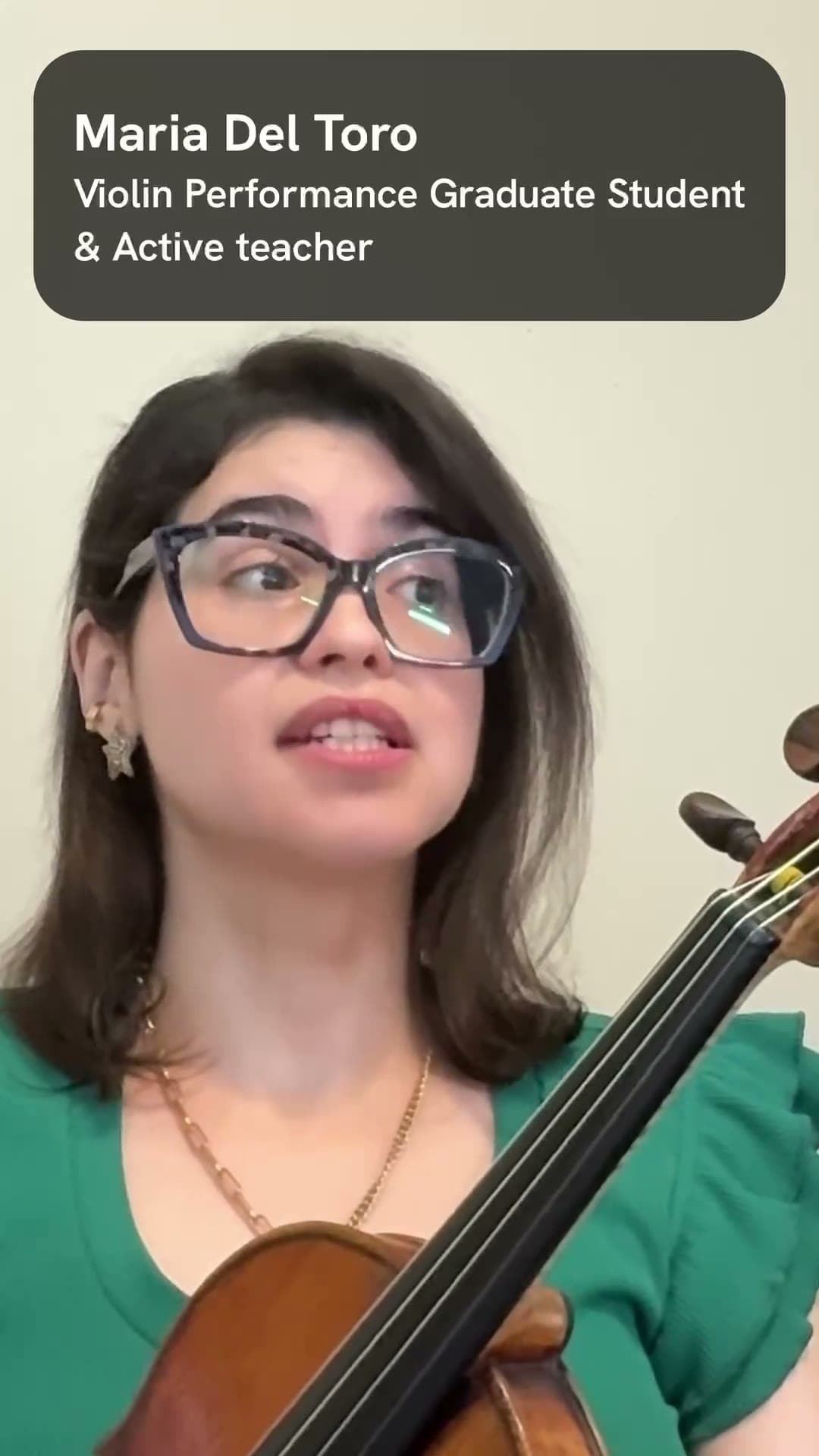
“I LOVE how accurate and comprehensive the notes are. … I also love that Arco is essentially my way of taking notes, so that I can just be present and teach!”
Sarah ColeySuzuki violin/viola teacher · SBC Institute of Violin & Piano
“I started the lesson in Chinese, then switched to English—Arco’s notes switched perfectly.”
Vicky WangCellist · San Francisco Conservatory faculty
“This is SO amazing.”
Jean BaverstamViolinist · New England Conservatory faculty
HUGE time saver!
Before Arco, I used to spend more than three hours a week taking notes while reviewing my lesson’s recording. Now I can just focus on listening, and then read Arco’s summary of my lesson.
“I LOVE how accurate and comprehensive the notes are. … I also love that Arco is essentially my way of taking notes, so that I can just be present and teach!”
Sarah ColeySuzuki violin/viola teacher · SBC Institute of Violin & Piano
“I started the lesson in Chinese, then switched to English—Arco’s notes switched perfectly.”
Vicky WangCellist · San Francisco Conservatory faculty
“This is SO amazing.”
Jean BaverstamViolinist · New England Conservatory faculty
Before Arco, I used to spend more than three hours a week taking notes while reviewing my lesson’s recording. Now I can just focus on listening, and then read Arco’s summary of my lesson.
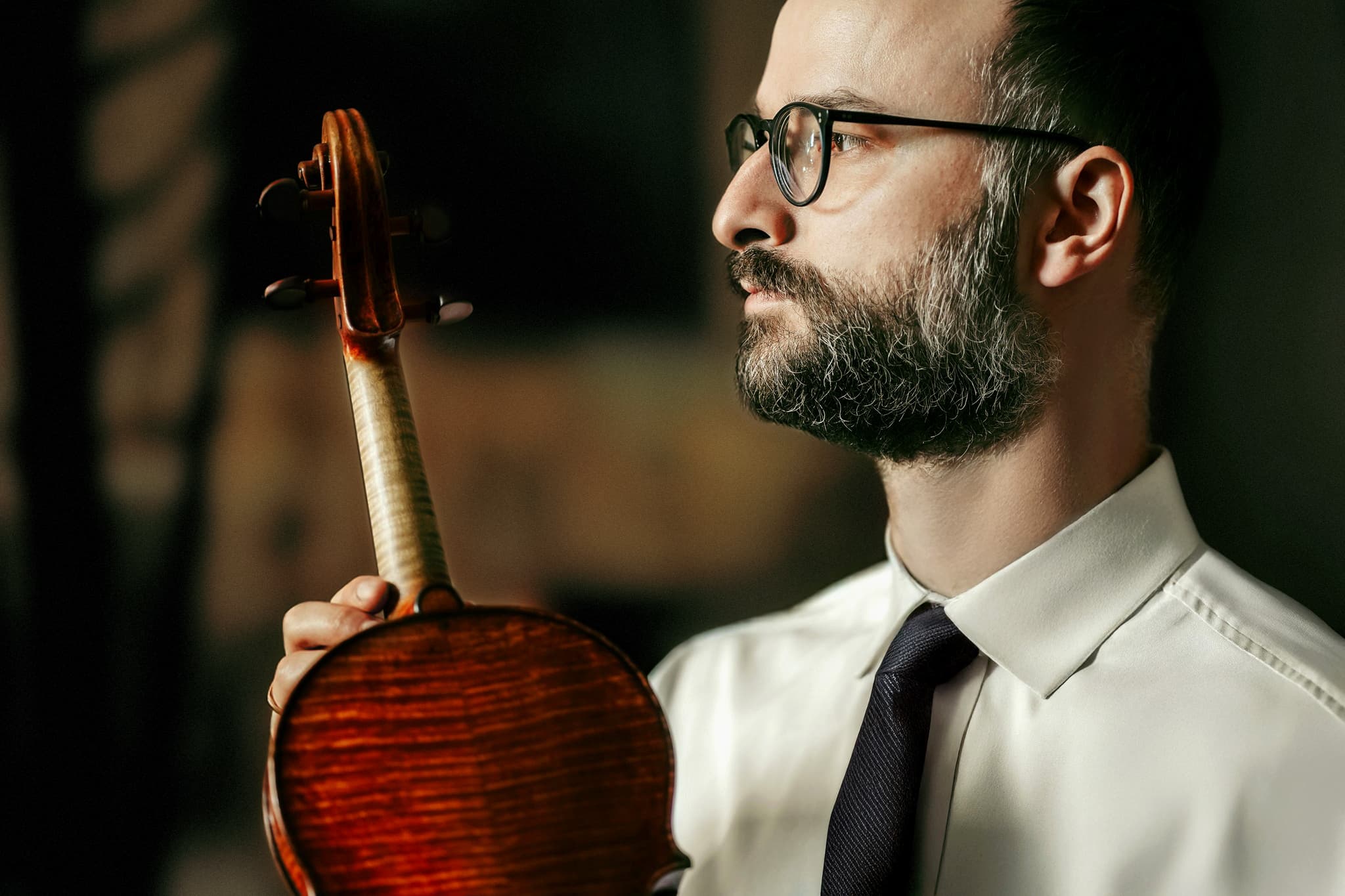
I’m Daniel Kurganov, violinist, teacher, and creator of the YouTube masterclass series many of you have followed over the years. For years, I watched profound moments disappear, both as a student and as a teacher. I collected notes, recorded myself, tried every system. Nothing worked the way I needed it to.
I’m Daniel Kurganov, violinist, teacher, and creator of the YouTube masterclass series many of you have followed over the years. For years, I watched profound moments disappear, both as a student and as a teacher. I collected notes, recorded myself, tried every system. Nothing worked the way I needed it to.