Rebuilding an uneven spiccato
An uneven spiccato usually means the wrist is making the stroke. The fix is to let the forearm throw the bow, use far more bow than feels necessary, and remove any arm motion that fights the direction of the stroke. This is how that went in one real lesson, step by step.

Daniel Kurganov, violinist and teacher
October 31, 2026 · 10 min read
The student in this lesson is an experienced adult player. They came in with a stroke that had started to misbehave. The down-bow came out stronger than the up-bow. It held together on the lower strings and fell apart on the E string. They had tried to get it up to tempo quickly, and something new had appeared along the way: their shoulder had started helping. They had never been a shoulder player, and they wanted to know what had happened.
Nearly everything here comes from that one 95-minute lesson. I’ve left out anything that could identify the student. The rest is what we did, in the order we did it.
First, the diagnosis
Once you’re doing the pecking chicken, that’s the problem. When there’s too much wrist, it’s always going to bias the down-bow.
I asked for a slow spiccato with a lot of bow. It showed up quickly. The forearm was barely moving, and the hand was doing nearly all the work. Hands are bad at this job. They can’t maintain an angle, and a stroke made from the wrist has a built-in preference for one direction.
It looks like it’s the wrist, but there’s a difference between the wrist and then it being thrown.
Plenty of very good players will tell you spiccato is all wrist, and I understand why. It does look that way. But a lot of people who can play this stroke don’t remember how they learned it, because it came easily when they were young. What you see is a loose wrist being thrown around by a forearm you can barely notice. Those are two different things.
The literature backs this up, with some nuance. Ivan Galamian writes that the main impulse for spiccato comes from the arm, with the hand and fingers partly active and partly passive, and that the center of action moves toward the hand and fingers as speed increases. That last part is the source of the confusion. At high speed, the hand does more. It just can’t be where you build the stroke. Leopold Auer, teaching the faster springing stroke, started from a short détaché in the middle of the bow using the wrist. That’s a different stroke at a different speed, and it’s worth knowing which one you are trying to fix.
Step one: make it big enough to see
We need these big illustrative motions that our dumb bodies can understand.
The student’s first instinct was to fix the problem at tempo, where the stroke is tiny. That’s the worst place to do it. Everything is small and fast, so it sounds wrong but you can’t tell why. So we went the other way: slow, with far too much bow, one impulse per note.
The number one reason is that there’s not enough bow, not enough horizontality. When things get faster, the stroke shrinks, but when it’s shrinking, it has to retain its horizontality.
The first thing to learn at this size is that you can trust the rebound. Throw the bow into the string and let it come back up on its own. If you keep controlling the bounce, you never find out what the bow wants to do. Feed in the looseness of the wrist last, once the arm is really doing the work.
Galamian says something similar: stress the horizontal over the vertical, and use more bow instead of letting it jump high. That’s also why this idea appears so often in my count of what I say in lessons.
Step two: find the motion causing the unevenness
It’s like the right concept in the wrong place.
With the stroke large enough to see, the second problem showed itself. On every down-bow, the student’s elbow went up. The bow was traveling one way and the arm was traveling the other. This had started as a good idea: anticipating the next stroke. But the anticipation had moved too early, until it became a contrary motion on every note.
That’s how you address unevenness. It’s not to try to be even. The way you address it is find what motion is causing it and do the opposite.
I gave them a deliberately crude instruction to break it: up-bow up, down-bow down. Everything together, and resist the urge to lift the arm on the down-bow. This cancels the habit. The final form of the motion comes later. It looked normal almost immediately, and this led to the most important thing I said that day.
Trying to be even is the trap. If you hear a weak up-bow and try to help it, you add one more hand motion to a stroke that already has too many. So when you hear something uneven, change the big swing. Maybe it’s too high, or angled the wrong way. Don’t reach in with the hand.
Step three: give the hand one job
The best use of the wrist and the hand is the front, the diction of a sound, rather than the actual body of a stroke.
Telling someone to stop using their wrist rarely works. The hand needs something else to do, so I gave it a clear role with an exercise: a short, sudden start to each note from the wrist, followed by the forearm sustaining right through the note. It’s somewhere between a martelé and an accent. If the note doesn’t sustain, the hand and the arm are doing the same thing, hitting and releasing together.
Then do the same thing with half as much bow, keeping the same feeling: the arm still coasts through the stroke, and the hand still only makes the front. This trains independence between the two, and it’s a good test. If the sustained part disappears as the bow gets shorter, the hand has taken over again.
Step four: think in three
Your ups and downs are much more even when you think in three.
Spiccato in groups of two or four keeps landing the same strong beat on the same bow direction, and that keeps feeding the imbalance. Groups of three flip it. The accent alternates between down-bow and up-bow, so neither direction can settle in as the strong one. Take any étude and play it in threes.
Step five: find the balance
If you supinate a little bit, it’s like being on the moon versus being on the earth.
The student’s hand was too pronated, and their pinky sat too high. Both make the bow feel heavier and the wrist tighter. A small move toward supination changes the balance so the bow wants to jump on its own. Let the pinky lie more naturally, and don’t curl the thumb. Then experiment: pull slightly with one finger, push slightly with another, and notice the point where the bow suddenly feels light. It’s different for everyone, because nobody holds the bow in exactly the same way.
It also gets a little too popcorn-y. Think more brush. It’s the car wash.
Near weightlessness is what you want, as if the bow could almost fall out of your hand while the forearm keeps swinging. If the stroke turns bouncy and hollow, you’ve gone too far. It should have some body to it.
Step six: ignore your mistakes
I call this flyover technique. If you have a motion that is correct and that you trust, even when something goes wrong, you don’t sacrifice the motion. It’s amazing what happens when you ignore a mistake, like truly ignore it physically.
I saved this for late in the lesson, because it only works once the motion is sound. A good stroke will still produce an uneven note now and then. If you react with your hand, you leave the swing, and now you’re correcting the correction. I can play this stroke ten times and some of them won’t be perfectly even. My arm just doesn’t respond to it.
What I told them to do next
 I made a whole masterclass on what to look for in the mirror.Violinists: How to REALLY use a Mirror to practice
The student asked whether to stay on the string for a couple of days. Yes. If the coordination isn’t comfortable on the string, it won’t be comfortable off it. Here’s what I told them after that.
- Start on the string. Go back to the simple strokes, like détaché and détaché with an impulse on every note. Make sure the big joints are making the length of the stroke.
- Use a mirror, with the scroll facing it. That angle shows the plane of the bow and any elbow motion.
- Go back to slow spiccato with too much bow. Stay there until there’s no question about whether the forearm is doing it. I told this student to be like a pig in the mud.
- Play études in threes. Carl Flesch’s three-volume étude collection is free on IMSLP and full of things you’ve never seen. Go to a random one.
- Try it fast, then go back. Don’t spend the whole week in slow motion. Go slow, try it fast, go slow again. You need that back and forth.
I didn’t give this student a number of minutes for each step, so I won’t invent one here. I asked Arco what my lessons actually say about timing, and the only thing it found is what I told another student: a few minutes every day on slow spiccato, in a scale or the passage itself, with a triplet version to help organize the stroke.
Other versions of this problem
Not every uneven spiccato is this one. These come from other lessons, with other students.
| What you notice | What is usually happening | What to try |
|---|---|---|
| The down-bow is louder and longer | The wrist is making the stroke | Slow, big, forearm-driven strokes. Then play in threes. |
| The elbow rises on down-bows | Anticipation has become contrary motion | Up-bow up, down-bow down, until it looks plain. |
| The stroke is heavy and tiring | The whole arm is throwing the bow | Move the work to the forearm, with a loose wrist. |
| It sits on the string and won’t come off | Stuck between two strokes, or the tempo is too slow for a natural lift | Choose: keep it on the string, or throw it clearly from the air. |
| It skims and has no sound | The wrist is loose, but the weight has gone too | Compact stroke, constant contact. Stay in the string like a bulldog. |
| It falls apart at string crossings | The bow rises too high before crossing | Keep the same amount of hair and stay close to the strings, as Galamian advises. |
| It’s fine until the E string | The stroke shrinks and loses its sideways travel | Use more bow, and keep the same horizontal feeling. |
How it ended
By the end of the lesson, the stroke looked better, and the two directions were much closer when the student thought in three. It wasn’t finished. This article shows one lesson of a longer rebuild. What changed that day was simpler and more useful: the student could now see what was wrong. The forearm is either driving the stroke or it isn’t. The arm is either going with the bow or against it. When you can answer those two questions yourself, you don’t need me in the room as much.
Questions people ask
- Does spiccato come from the wrist or the arm?
- Build it from the forearm, with a loose wrist that gets thrown along by the motion. It can look like the wrist from the outside. Galamian describes the main impulse as coming from the arm, with the hand and fingers doing more as the speed increases.
- Why is my down-bow stronger than my up-bow in spiccato?
- The most common reason is too much wrist, which favors the down-bow. An elbow that rises on the down-bow makes it worse. Build the stroke from the forearm, remove the contrary motion, and practice in groups of three so the accent alternates between directions.
- Where on the bow should you play spiccato?
- Mostly in the lower two-thirds. Galamian places broad, slow spiccato lower in the bow and fast, short spiccato near the middle or slightly above it.
- How do I practice spiccato if it keeps falling apart at speed?
- Make it bigger and slower until the motion is obvious, then alternate that with short tests at tempo. A few minutes of slow spiccato every day goes a long way. When a stroke is very small, it shows whether everything has gone right, but it’s not the place to change anything physically.
Sources
- Notes from Daniel Kurganov’s Lessons in Arco.
- Ivan Galamian, Principles of Violin Playing and Teaching (1962), on spiccato in Chapter Three.
- Leopold Auer, Violin Playing as I Teach It (1921), Chapter V, “Hints on Bowing.”
- Carl Flesch, étude collection in three volumes, available on IMSLP.
- Daniel Kurganov, “Violinists: How to REALLY use a Mirror to practice”, YouTube.
Keep reading
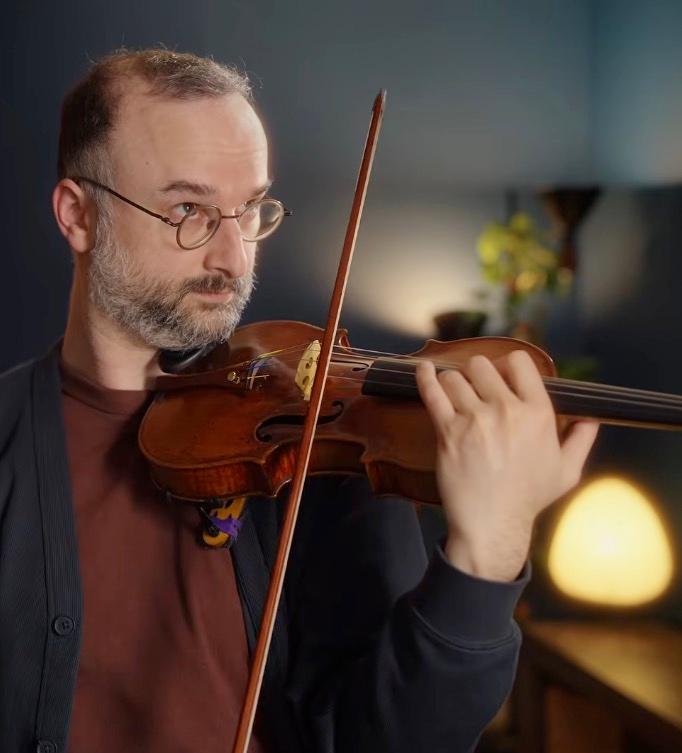
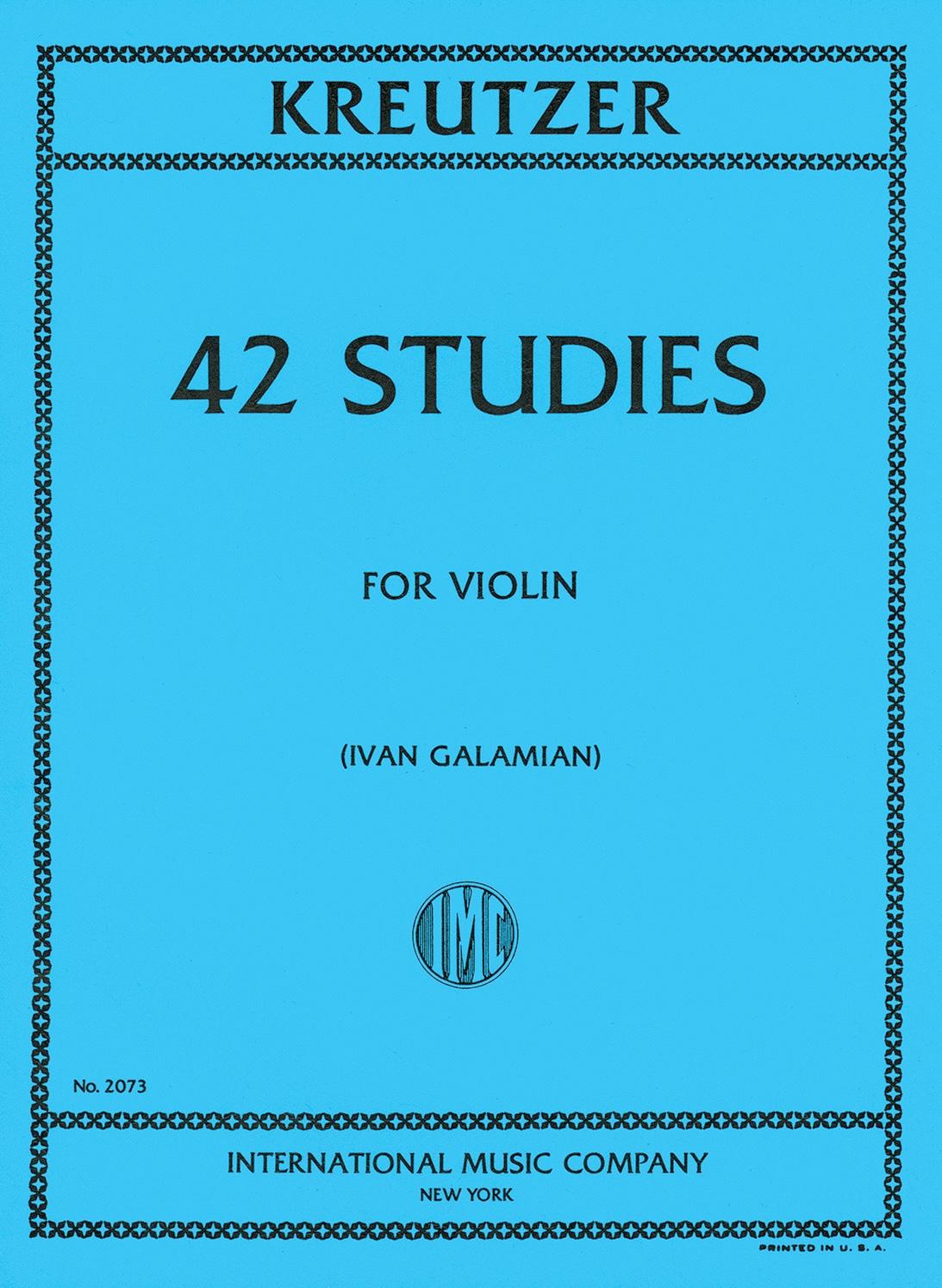
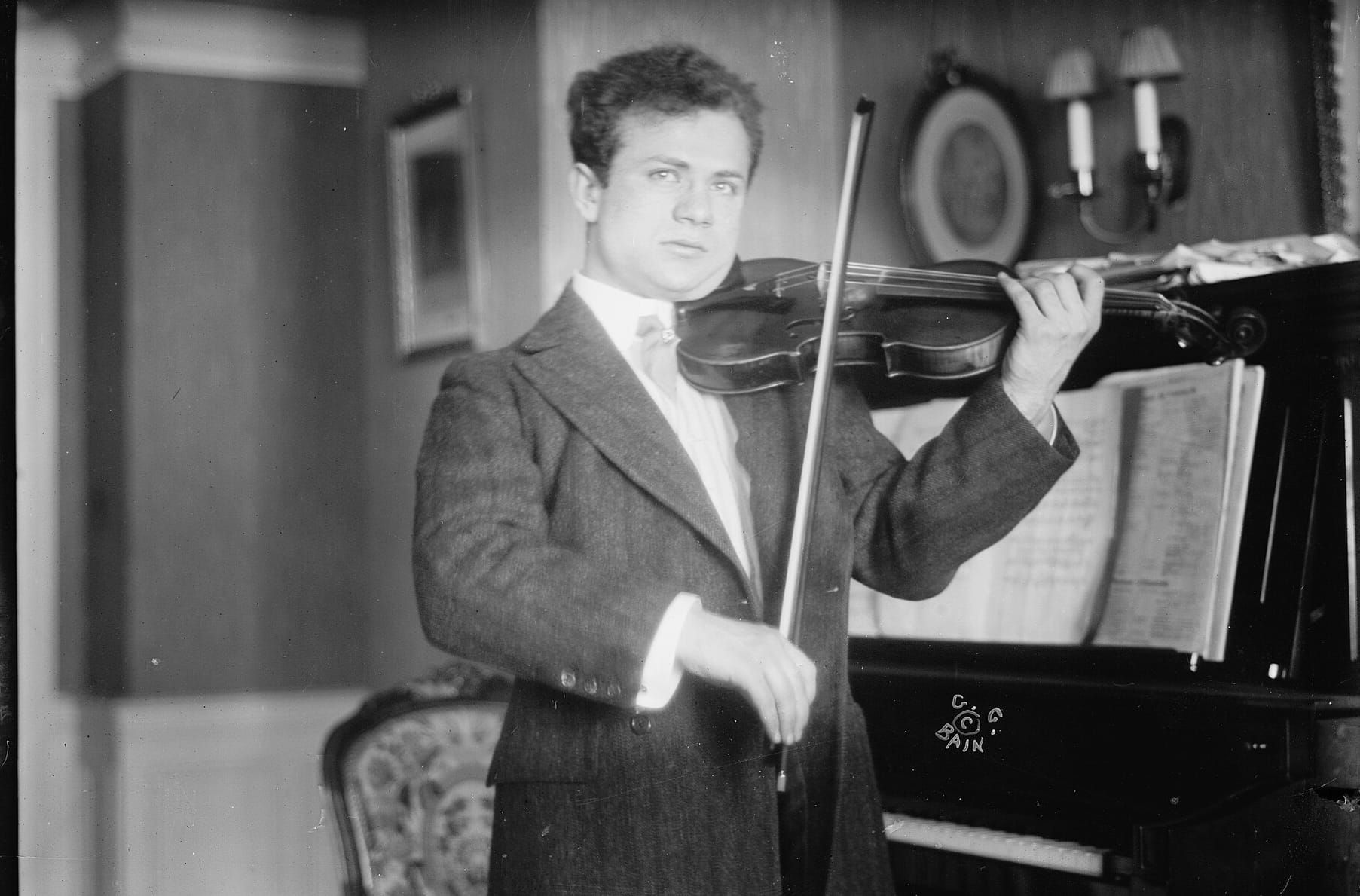
A rebuild like this depends on remembering exactly what was said and shown. Arco writes up every lesson, so you can replay the moment and ask about it later.
Start Free