How to practice Kreutzer No. 2
Kreutzer No. 2 is a bow study. The left hand is simple enough that all your attention can go to one question: does every note carry the same sound? Practice it in this order: even détaché in the middle of the bow, then the lower half, then string crossings, then bowing variations. Speed comes last.

Daniel Kurganov, violinist and teacher
October 31, 2026 · 9 min read
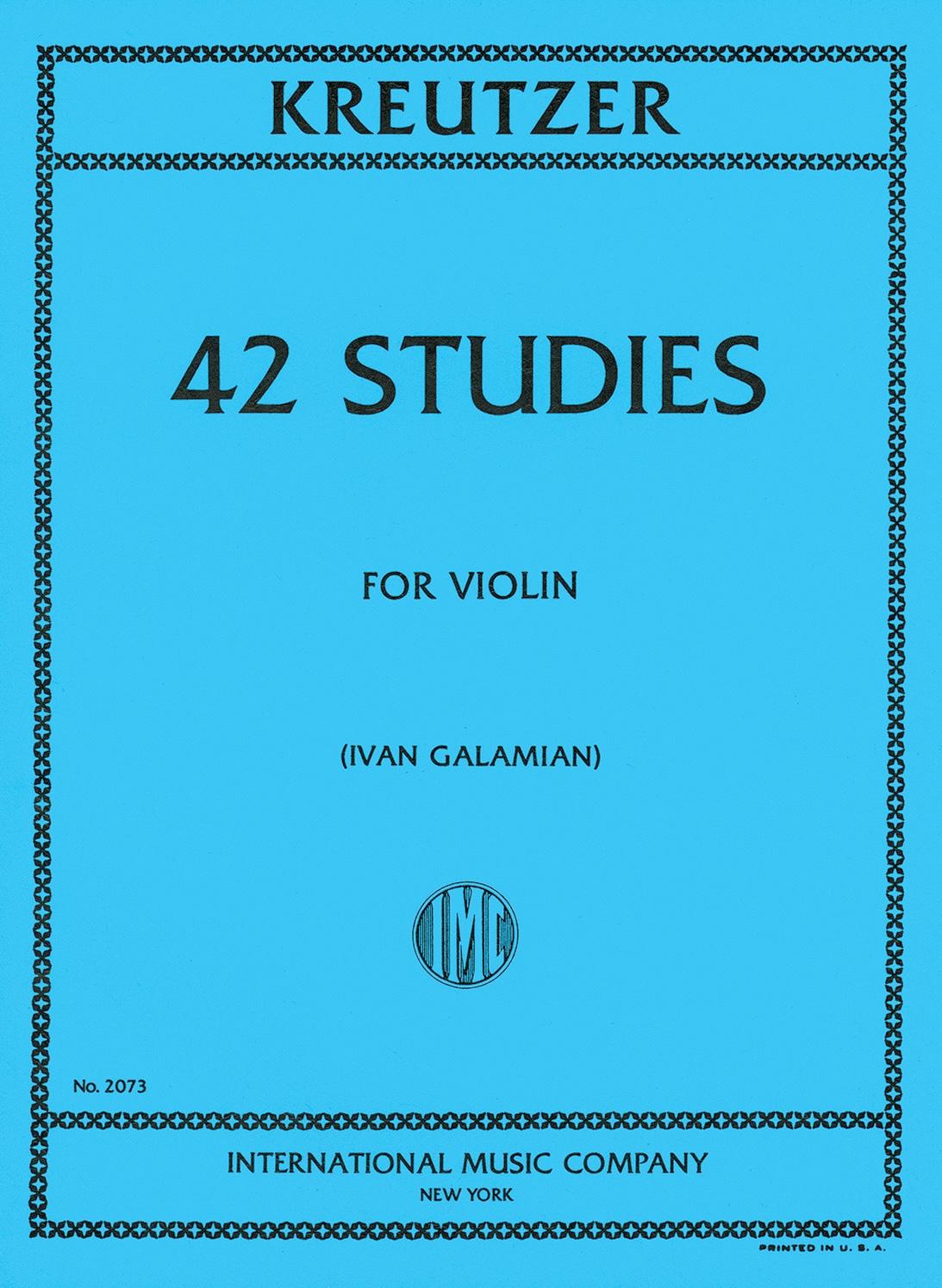
Rodolphe Kreutzer (1766–1831) was one of the founders of the French violin school, and yes, he’s the Kreutzer of Beethoven’s “Kreutzer” Sonata, which he reportedly never played. His 42 Études ou Caprices have been a standard part of violin training for about two centuries, and No. 2 is the one nearly everybody meets.
It is so familiar that it’s easy to treat as a chore. Simon Fischer calls playing it with bowing variations one of the key technique-building methods violinists have used through the generations, and he notes that most editions print a set of variations. Galamian’s edition gives more than sixty bowing patterns. Massart’s gives 150. You don’t need 150. Kreutzer No. 2 appears in the notes of at least 15 of my lessons, and the same handful of things comes up every time. Here they are, in the order I work on them.
The goal: computer-level evenness
The goal is even sound, same amount of bow. Just going for computer-level evenness.
The first target is deliberately unmusical. You want the same amount of bow and the same sound on every note, the way a machine would do it. This étude is the place for it, because nothing else is competing for your attention.
It’s fine to make the left hand easier so the bow can have your attention. If one note takes you to the E string and straight back, use a fourth finger and skip the crossing, at least for now. If the intonation is getting in the way, use simpler fingerings for a while. You’re not preparing this étude for a concert. It’s a tool, so adjust it until it does its job.
First: détaché from the middle to the tip
The upper arm is quiet. It’s just a hinge. Your elbow is a hinge, like a door hinge. That’s all it does in the upper half.
Start with détaché in the middle of the bow, then work your way up. The motion here is simple and it is different from the lower half: only the forearm opens and closes. If you move the whole arm, the bow goes crooked. Before you play the étude, try this on an open string. Start at the middle, go down-bow to the tip, then up-bow back to the middle, with the upper arm doing nothing.
Now watch the bow change. A common habit is for the elbow to move first, dipping before the bow has finished its stroke. Let the fingers and wrist begin the change, and let the elbow follow.
Feel that little cushion between the first finger and the bow stick. Give it a little bite at the beginning of each stroke. Not a crunch, just a bite, like the letter T.
Once the motion is clean, the sound often turns out a bit surface-y, with no core. The instinct is to push down with the arm. Don’t. The weight comes through the first finger, as a small lean into the stick. Then give each stroke the smallest clear beginning.
Second: the lower half
When you’re in the lower half, it’s essentially pinky and thumb, and the other fingers are just there like rudders on a boat.
The lower half works differently. The stroke comes from higher up the arm, from the upper arm and shoulder, and the hand reacts to the friction. In this part of the bow, it’s mostly the thumb and pinky holding things in balance.
So slow the bow down a bit so you can feel the traction, the friction. I’d rather you crush the sound there than save the bow from crunching.
This is where nearly everybody develops the same bad habit: lifting. As the bow nears the frog, it gets heavy, so you take it slightly out of the string to save the sound. It works for that one note. Then the sound has gone thin, and you’ve got to reset for the next one. Stay in the string, slow the bow down if you have to, and feel the traction. I would genuinely rather hear a crunch.
 If the frog is your pain point, this exercise is for you.Imperceptible Bow Changes at the Frog
Pronation is often part of this. If the hand is rolled too far toward the first finger, the pinky can’t do its job, the arm has to stay high, and the frog gets clumsy. Supinate slightly so the pinky is involved, and let the arm come down. You can still get all the weight you want.
Third: fill every note
Even bow speed. Anticipate string crossings with the arm. Don’t rush. Fill each note. Same sound in the upper half and lower half.
When the notes all sound alike at a slow tempo, try mixing long and short values: two half-bows and a whole bow, for instance. Now the short notes want to rush, because they don’t feel important. They are. Good sound is the best antidote I know for rushing. Each short note should feel almost lazy, because there’s so much sound in it.
Fourth: string crossings
The étude moves across strings constantly, and each crossing is a chance for the bow to turn light and reset. Two ideas help here.
There’s a difference between synchronizing something and coordinating it.
The first is that the arm should arrive slightly ahead of the bow, like the handle of a paintbrush arriving before the bristles. If everything changes at the same instant, the crossing turns angular and the bow plays catch-up.
I’m happy if you crack the sound. You can always pull back from that. The hard part is to do enough, not to do too much.
The second is to listen for the tiny double stop between the strings. If you can hear it, the bow never abandoned the string. Students are usually afraid of this because it can crack, and I’m fine with that.
Fifth: bowing variations
It should be like a bullet.
Now the variations start to pay off, because each one tests something specific. I would begin with these three. Fischer’s point is worth remembering here: the benefit of just a few patterns is dramatic, and it gets overlooked because they seem so ordinary.
If you lift, now the hand is tense, now I have to somehow get it back to the string. So never, never lift.
- Short, sustained strokes that travel. This one is from Fischer. Play short, evenly sustained strokes while moving gradually along the bow, so it sounds as if you were playing in one place.
- Two slurred, two separate. I like this one because it takes you back and forth across the bow, and the slurs and separate notes need different amounts of bow at the same speed. You will find out quickly whether you are planning your bow or just using it.
- Martelé above the middle. Below the middle, it becomes a different stroke. Most students either lift between strokes or press and release on every note. Use a very fast stroke, less bow than you think, and leave the bow on the string.
One phrase covers most of what goes wrong in martelé: treat the end of one stroke as the beginning of the next. If you let the stroke hang out at the end and then think, “Oh, I have to set the bow now,” you’re already late. When you get it right once, do it again immediately. In one lesson, I told a student to right-click and save as: keep that sensation and that sound together as one thing you can recall, and stop treating it as a list of instructions.
Last: speed
The important thing with the metronome is that it is a partner and not a tyrant.
Add the metronome only after the sound and the physical feeling are organized. Your practice tempo is whatever is slow enough to track three things at once: the sound, how much bow you’re using, and your contact with the string. As each bowing gets more comfortable, push the tempo up with that bowing.
How long, and in what order
Here is what I’ve actually told students. In a practice session, open strings come first, for about 10 to 15 percent of the time or more. Then the left hand, with Dounis or Schradieck. Then the bowing studies, including this one.
For the étude itself, I’ve suggested doing all the bowings in one session, about 15 or 20 minutes for the whole étude. Split them up: take the first three lines with one bowing, then move on to the next. And don’t stay on any one bowing too long. Simon Fischer proposes a good test in The Violin Lesson: play through a piece once, spend twenty minutes on Kreutzer No. 2 with a few bowing patterns in all parts of the bow, then play the piece again.
| Time | What Arco suggested | Where it comes from |
|---|---|---|
| 3 min | Play the first three lines at a tempo where you can hear each note and keep the stroke clear. | Arco’s arrangement, with Galamian’s light left hand |
| 4 min | Take one printed bowing through the first three lines. Use a different bowing on other days. | The advice above |
| 4 min | Play the first note detached with an accent, then slurred pairs. Keep the impulse on the accented note. | Zakhar Bron, who applies this “Viotti bowing” to No. 2 |
| 2 min | Practice explosive up-bow strokes on a few notes, with a rest between each one. | Dounis, as described by Kara Eubanks |
| 2 min | Go back to the written version, and write down one thing you noticed. | Arco’s arrangement |
Common mistakes
| What you hear or see | The likely cause | The fix |
|---|---|---|
| Sound thins out near the frog | You are lifting to avoid a crunch | Stay in the string and slow the bow a little |
| Accent on every bow change | The elbow moves first | Let the fingers and wrist start the change |
| Crooked bow in the upper half | The whole arm is moving | Open the forearm with a quiet upper arm |
| Surface-y sound with no core | Not enough contact, or pressing with the arm | Lean with the first finger, and give a small bite |
| Short notes rush | They don’t feel like real notes | Fill each one with sound and let them feel lazy |
| Martelé feels exhausting | Lifting or pressing and releasing on every stroke | Stay on the string and aim for the next catch |
| Whole passage sits sharp or flat | The hand is misplaced, not one finger | Ask first whether it’s local, then move the whole frame |
A note on intonation: when a student says a line is “75% in tune,” I ask a better question. Is that note sharp or flat? Is it one note, or is the whole hand sitting in the wrong place? Those have different answers. More on that here.
Questions people ask
- What does Kreutzer Etude No. 2 teach?
- Mainly bow control: even détaché, bow distribution, contact with the string, bow changes and string crossings. Its bowing variations extend that to other strokes, such as martelé and mixed slurs and separate notes.
- What bowing should I start with on Kreutzer No. 2?
- Start with plain détaché in the middle of the bow, aiming for the same sound on every note. Then move to the lower half, and add two slurred, two separate before you try specialized strokes.
- How long should I practice Kreutzer No. 2?
- I’ve suggested about 15 or 20 minutes for all the bowings in a session, split up: the first three lines with one bowing, then on to the next. Simon Fischer suggests twenty minutes with a few bowing patterns in all parts of the bow.
- How fast should Kreutzer No. 2 be?
- Practice it slowly enough to track the sound, the amount of bow and the contact with the string. As each bowing gets more comfortable, push the tempo up with that bowing.
- How many bowing variations are there for Kreutzer No. 2?
- Simon Fischer notes that Galamian’s edition gives more than sixty patterns and Massart’s gives 150. You don’t need all of them. A few, chosen to test a specific weakness, will do most of the work.
Sources
- Notes from Daniel Kurganov’s Lessons in Arco.
- Simon Fischer, Basics and The Violin Lesson, on Kreutzer Etude No. 2.
- Kara Eubanks, Essays in the Theory and Practice of the Suzuki Method, on Dounis and up-bow staccato.
- Rodolphe Kreutzer, 42 Études ou Caprices.
- Daniel Kurganov, “Imperceptible Bow Changes at the Frog”, YouTube.
How this was made
Researched with Arco’s expert knowledge, then checked against the original texts.
Keep reading
If you’re working on this étude with a teacher, record the lesson with Arco. Next week you can ask it exactly what was said about your détaché.
Start Free