How to practice a hard passage
Find the exact transition that fails, invent a small exercise that loops it, change one thing each time, and then add the context back. Repeating the whole passage until it works is the slowest way to learn it. Below is a one-page sheet you can print for yourself or your students, followed by the reasoning behind each step.

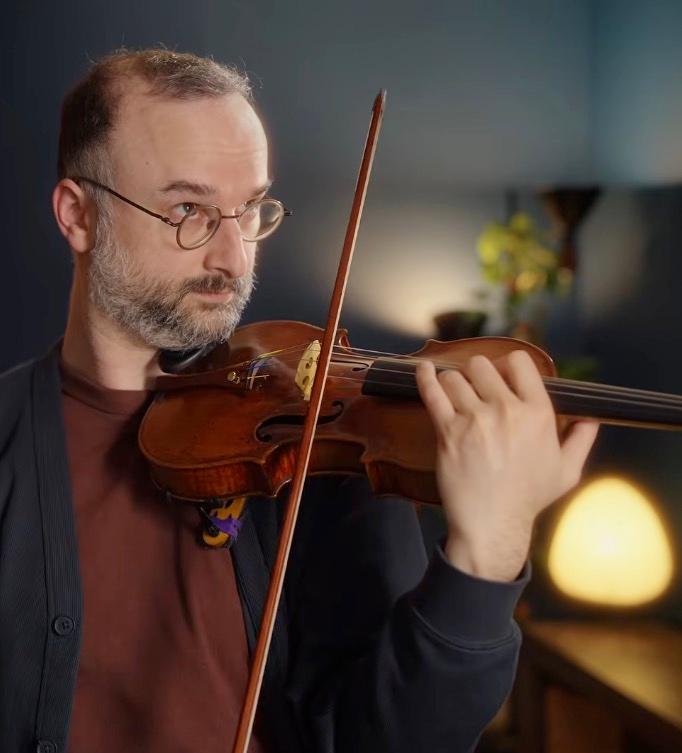
Daniel Kurganov, violinist and teacher
October 31, 2026 · 10 min read
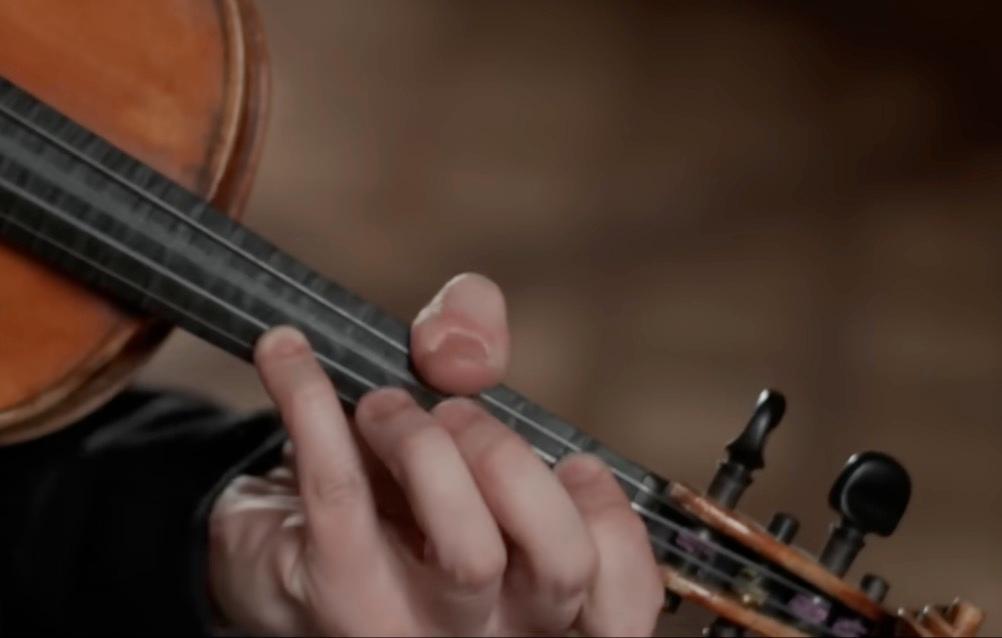
This sheet prints on one page. Hand it to a student, or keep it on your stand.
How to practice a hard passage
Stay with each method for about a minute, and longer if it shows you something you don’t like.
- Hear it firstKnow how it should sound and feel. You should be able to sing the color and the intention you want.
- Find the failureDon’t stop at the bar. Find the exact two notes, shift, or string crossing where it goes wrong.
- Build a loopTake the smallest group with the problem, plus the first note after it. Repeat without stopping the sound.
- Change one thingTry rhythms, a loud left hand with a soft bow, the bow alone on open strings, or reversed bowing. Each one should answer a question.
- Make rhythms extremeMake the long notes as long and loose as possible, and the fast notes truly fast. Check for tension on the long notes.
- Exaggerate, then pare downStart with big, obvious motions. Then make them smaller until almost nothing shows.
- Add the context backWork outward from the note to its neighbors, the phrase, and the phrases around it. Expect it to break when you do.
- Save what workedWhen it works once, do it again the same way. Now repeat to remove what isn’t helping.
What to avoid
- Repeating with no question in mind
- Slow practice with a different stroke from the final one
- Repeating a motion that isn’t efficient
- Practicing while you’re bored
Daniel Kurganov · arco.app/blog
Why repeating doesn’t work
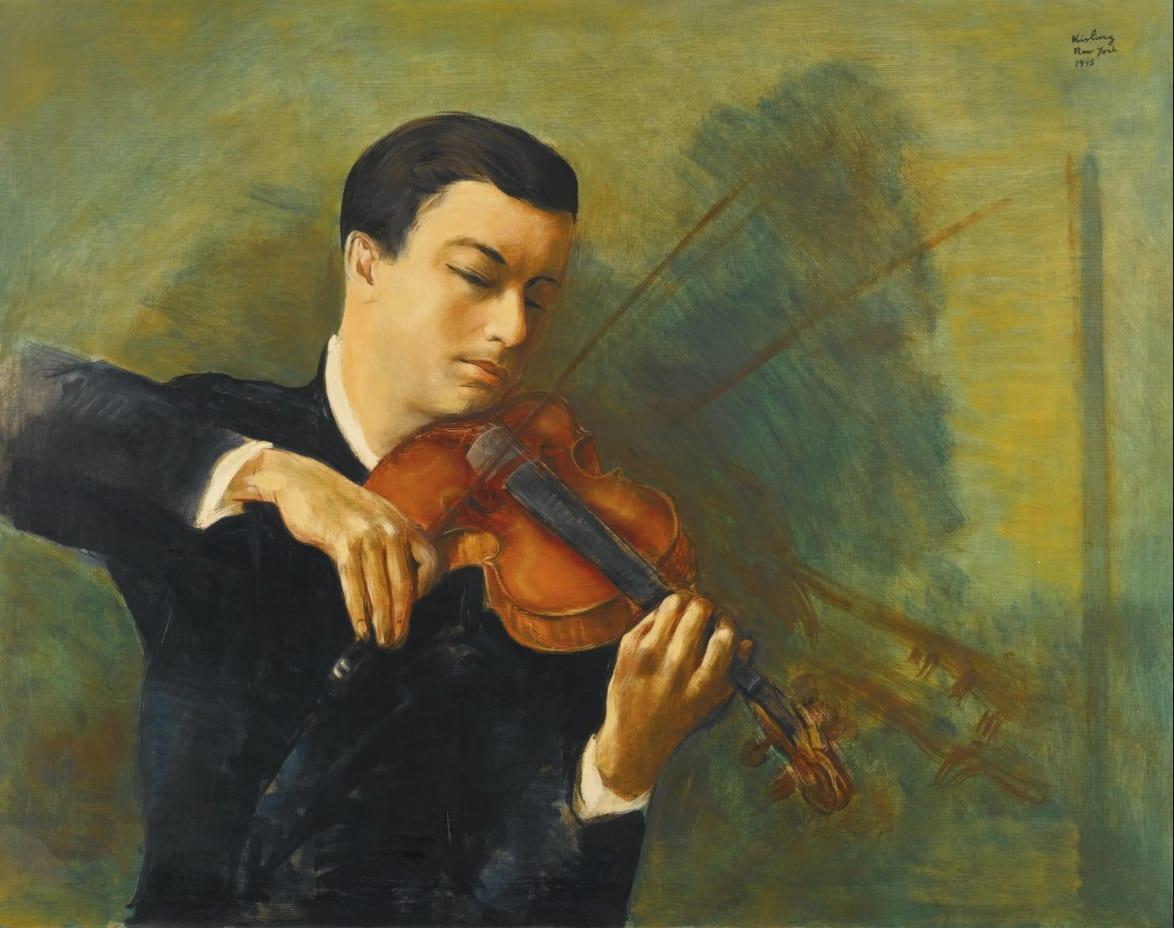
I started the violin at 16, which is very late for someone who ended up doing this for a living. I didn’t have years to waste, and these methods were crucial in my own journey. They’ve also been essential for my students. The first thing I had to give up was the idea that repetition teaches you anything by itself.
Nathan Milstein said that practicing is the art of invention. His point was that there’s no use practicing too much until you’ve found out how to do it best, and that you should think with your brain and not with your hands. If someone tells you that you can watch TV and run a passage on autopilot, that isn’t good advice.
Most of this article comes from that masterclass, where I work through Lalo’s Symphonie espagnole one passage at a time. If you want to see and hear these methods, it’s the place to go.
The best kind of practicing is inventing little exercises. You have to find out, okay, what’s the problem? Can I invent a little exercise? And then the best exercise is one where you don’t have to stop the sound.
Teachers before me have said this in their own way. Ivan Galamian wrote that the player should present the mind with problems to solve, moving from the simple to the complex, and that rhythm and coordination problems suit this best. He also says something that a lot of students need to hear: once a problem is mastered, it’s useless to repeat it over and over. Move on to the next one.
Three ideas behind all of it
Part of knowing one thing is to be able to land on the next thing. Otherwise you don’t really know the first thing.
When I’m working on a passage, I come back to three general principles more than any particular trick.
- Anticipation. Know which fingers come next, what shape the bowing makes, and how the sound should be, before it happens. It’s like laying down the tracks just before the train comes. If you lay them as the train arrives, you’ve got a problem.
- Changes. It’s all in the transitions: string crossings, bow changes, shifts, colors. That’s where you’ll find precision and cleanliness, and it’s what gives music its identity and meaning.
- Patterns. A phone number is easier with the dashes in it. Memory champions turn digits into stories. Group the notes into shapes you already know, and there’s less to remember.
Hear it before you practice it
You have to hear it in your mind before you play it. If you don’t have a very strong opinion of what it should sound like, it’s very difficult.
Every repetition is a comparison. You need a detailed idea of what you want, either imagined or from a favorite recording, and you need to be measuring yourself against it the whole time. Without that picture, you are just getting through it. I’m not the greatest singer, and you don’t have to be, but you have to be able to sing the color and the intention you want, in the shower if you have to.
Find the transition that fails
When you say “this bar is hard,” you haven’t diagnosed anything. Find out which finger to which finger, which shift, which crossing. This is what rhythm practice is really for. The point of doing rhythms is to notice which transition each one exposes. In one Lalo passage, I found that my problem was a third finger needing to bite quickly and release, so I chose a rhythm that makes me do exactly that.
Build a loop, and include the landing
Pick the smallest group of notes that contains the problem, and include the first note after it. Otherwise, you’re polishing fragments that will fall apart at their edges. Loop it without stopping the sound. Each repetition should feel a little calmer and a little more premeditated.
Choose the loop carefully, because a bad one can rehearse the wrong thing. If it’s too small, your hand will find a comfortable average position that it would never have in the real passage. Include enough context that the fingers arrive the way they will in the music.
Change one thing each time
Every repetition should look at the passage from a different angle. These are some of the ways I do that. I may stay on one for a minute, which feels like an eternity, and longer if it’s showing me something I don’t like.
- Strong left hand, soft right hand. Keep the fingers very articulate and the bow barely there. I’m attracted to this way of practicing because the attention can’t all sit in the left hand.
- Open strings for the bow alone. Take the left hand away and see whether the bow’s path actually works.
- An open string between every note. Each time, you reset, and you have no reference. It tests whether your hand is hovering in the right place.
- Reversed bowing. A passage gets comfortable in one bowing, and comfort hides things. Reverse it, and you’ll hear string crossings and notes that weren’t clean. Fix those, and the normal bowing improves too.
- Slow spiccato or legato. These change the coordination, and spiccato exposes any spasms in your right arm.
- Add one note at a time. This one goes well with rhythms. Always make the final note beautiful and vibrated.
Make your rhythms extreme
The mistake many people make is that they don’t take the time on the slow note. The slow notes must be really slow and the fast notes must be really fast. You should feel that you have all the time in the world on the long note. Use it. Check your shoulders and your hand, and get as loose as jelly. Then comes the burst. Keep the bow smooth while the left hand does this: your right arm shouldn’t pay any attention to the electricity in the fingers.
Some people practice their shifts slowly, like good boys and girls. Rhythms are where you learn to shift quickly as well, because sometimes the shift lands on a fast note.
Exaggerate, then pare down
We think of slow practice as this disjointed kind of thing, it’s our laboratory. But you should think of slow practice as, okay, I have to make it beautiful, and it’s going to be even harder because it’s slower.
Everyone is told to keep their fingers close to the fingerboard, and often that’s right. But it doesn’t work that way in the practice room. To reach simplicity, you often need complexity to carve down. You can’t start with the finished sculpture. You start with a big chunk of clay. Bruce Lee could knock someone down with a punch from one inch away, but that isn’t where you learn how to punch.
Slow practice has the same trap. If the final stroke stays on the string in the lower half, your slow version should too. Otherwise you’re training something you’ll need to undo.
One caution comes from Yuri Yankelevich, who believed an extremely slow tempo is useful for checking details and finding the cause of a problem, but doesn’t work as your regular way of practicing. You need the back and forth.
Add the context back
This is where people get discouraged. You get something perfect ten times in isolation, you add two notes before it, and you miss it. That’s normal. It’s how this works. A problem has to be solved at several levels of resolution: the note, the note and its neighbors, the note inside the phrase, and that phrase with the ones around it. Only then have you really fixed it.
Zoom out at some point, too. Once you’ve worked out the details, ask what the general shape of the arm is across the whole passage, where it starts and where it ends. Many small motions become one big one, and one big one is a lot easier to remember.
Now you’re ready to repeat
If it’s not efficient, you don’t practice it. Only start doing repetitions once you’ve figured out the efficient route for whatever pattern.
After all of this, repetition finally has a purpose. Getting it right is where the work starts. Now you repeat it a hundred times, not mindlessly, but to remove everything that isn’t helping you do it.
And be fair to yourself. Most of us are built to max out at about nine out of ten. Some of the greatest musicians of all time make mistakes all the time. What you’re after is an expanding level of comfort with the shifts, the finger placement, the articulation and the sound.
How long to stay on it
I would say like 15 minutes and then a break, like a few minute break. And then you could do another 15 minutes. I wouldn’t do more than 45 total at a time. You just get brain dead.
I asked Arco what my lessons actually say about this, and it pointed out that I don’t have a universal number. What I have is a stopping rule: repeat until the small action is efficient and fluent, then expand it, and stop that version when the sound, the coordination or the ease begins to break down. If ten repetitions aren’t improving it, stop and work out why. For one small exercise, I’ve told students about a minute. For a long stretch of hard work, I’ve told them 15 minutes and then a break, and no more than 45 at a time.
And watch your attention. If you’re bored, it means you’re not paying attention.
For teachers
Print the sheet above and hand it out. It prints on one page, and I would rather you use it than not.
Questions people ask
- What is the best way to practice a difficult passage on the violin?
- Find the exact transition that fails, make a short loop that includes the note after it, and change one thing with each repetition, such as the rhythm or the bowing. Then add the surrounding notes back, a little at a time.
- Does slow practice actually work?
- Yes, when the slow version uses the same stroke and the same musical intention as the final version. Yankelevich cautioned against extremely slow practice as a routine. Use it to inspect details, and go back and forth with faster tempos.
- How do you do rhythm practice on the violin?
- Group the notes into patterns of long and short, and then reverse them. Make the long notes very long and relaxed and the short notes truly fast. Pay attention to which transition each pattern exposes.
- How many times should I repeat a passage?
- There isn’t a useful number. Start repeating once you’ve found the efficient route. If your repetitions aren’t improving after about ten, stop and work out why. Once it works, repeat it many more times while you remove anything that isn’t helping.
- How long should I practice a hard passage at one time?
- I’ve told students about a minute on one small exercise, and for longer work, about 15 minutes and then a break, with no more than 45 minutes at a time. After that, you stop paying attention.
Sources
- Notes from Daniel Kurganov’s Lessons in Arco.
- Daniel Kurganov, “How I wish practicing was explained to me as a student”, YouTube.
- Ivan Galamian, Principles of Violin Playing and Teaching (1962), “Technique and Correlation” and the chapter “On Practicing.”
- The Russian Violin School: The Legacy of Yuri Yankelevich, on slow practice.
How this was made
Researched with Arco’s expert knowledge, then checked against the original texts.
Pictures: Moïse Kisling, Portrait du violiniste Milstein, public domain, via Wikimedia Commons.
Keep reading

The hardest part of this method is remembering the diagnosis. Arco keeps every lesson, so you can ask what your teacher told you about this exact passage.
Start Free