Russian or Franco-Belgian bow hold?
The main difference is where the index finger meets the stick: a little below the middle joint in the Franco-Belgian hold, and above it in the Russian. Leopold Auer used a Russian hold, as some of his students did, and he still refused to give a rule. I think that’s the right lesson. The name matters less than whether your hand can balance the bow without gripping it.

Daniel Kurganov, violinist and teacher
October 31, 2026 · 9 min read
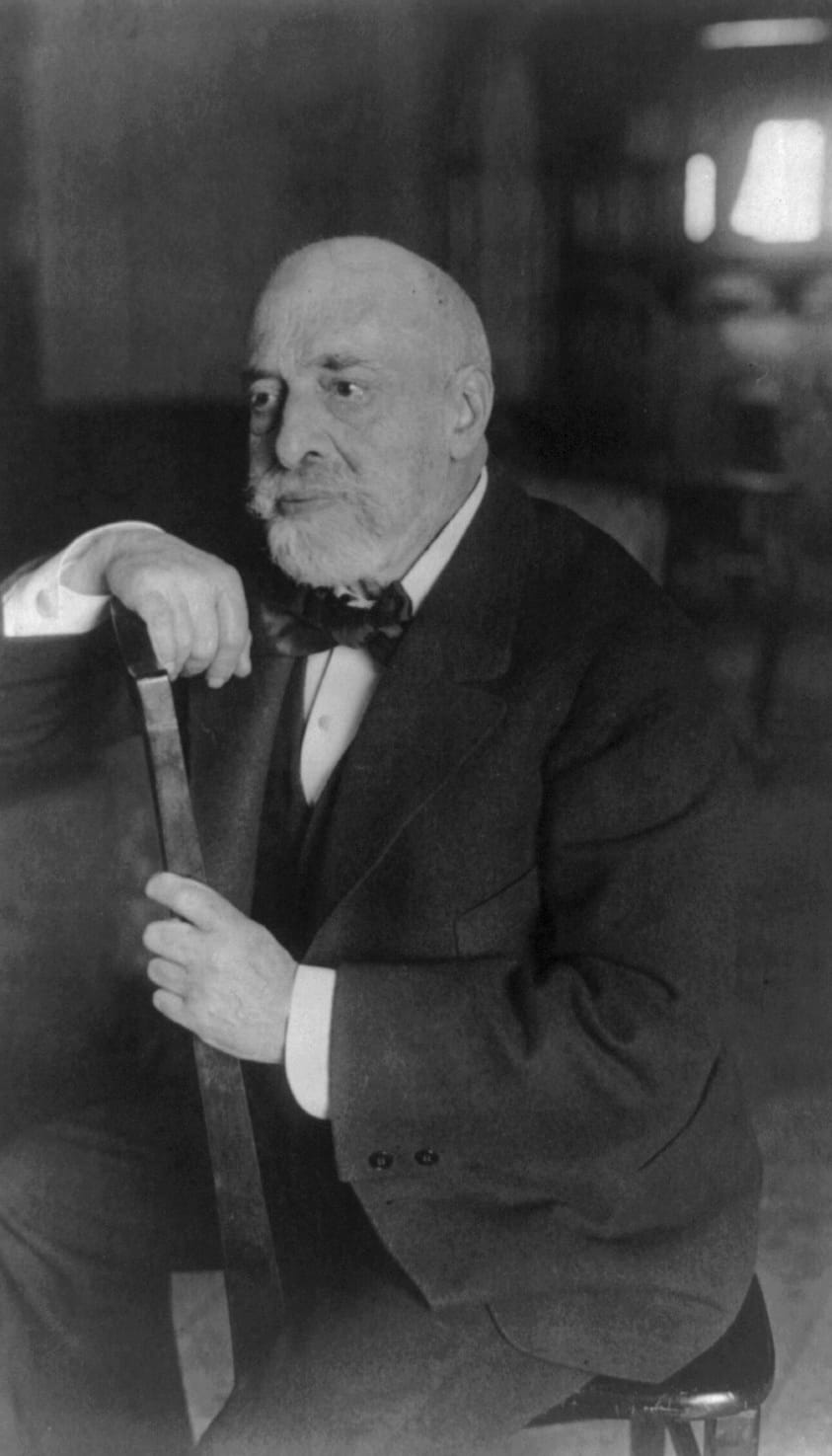
Students often ask me some version of this: “What’s my bow hold? Should I change it?” Search the question and you’ll find tidy charts of three schools with three national flags on them. The original sources are a lot messier, and a lot more useful.
What the holds actually are
The main difference is how deep the index finger sits on the stick. Carl Flesch describes three ways of placing the fingers: the older method, at the fingertips; the Franco-Belgian; and the Russian, with the index finger further forward. Everything else on this chart follows from that.
| Index finger | Arm and hand | What it gives you | What can go wrong | |
|---|---|---|---|---|
| Older German | At the fingertips | Pinky stays on the stick, even at the tip | Sensitivity in the fingertips | A smaller sound, and stiff fingers at the frog |
| Franco-Belgian | A little below the middle joint | Rounded fingers and a lower arm | Spring in the hand and easy bow changes | Needs the arm to hang, not push |
| Russian | Above the middle joint | Higher elbow and wrist, with a strongly pronated hand | A rounder sound, according to Flesch | A hard sound and a clumsy frog if too deep |
| Galamian’s basic grip | Changes with the music | Curved, relaxed, nothing locked | A base you adjust for the sound you want | Treating the base as a fixed position |
Flesch named it, and doubted the name
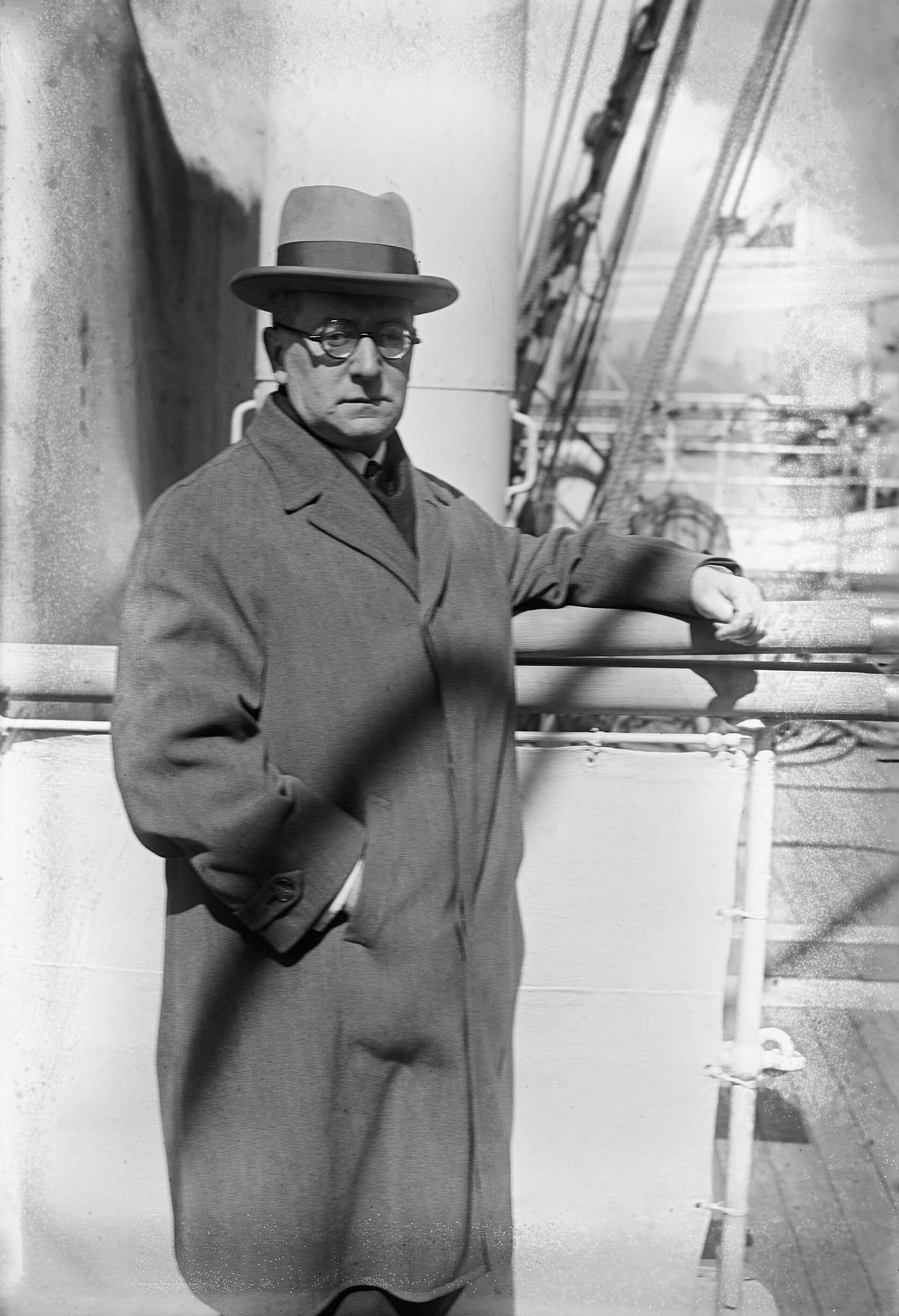
The introduction to The Russian Violin School: The Legacy of Yuri Yankelevich traces the term “Russian bow hold” to Flesch, who probably saw it in Heifetz and Elman. Flesch didn’t just hand down the label, though. In Problems of Tone Production in Violin Playing, he refers to what he had called the Russian manner “either justly or unjustly.” Even the person who named it wasn’t sure the name was right.
He does make a real claim about sound: the tone is much rounder with the index finger further forward. But he sets a limit. If the finger goes as deep as the beginning of the third joint, counted from the nail, every benefit reverses. He says the tone becomes hard and inelastic, playing at the frog gets clumsy, and the détaché at the tip gets shaky.
And then he does something that those three-flag charts leave out. He says that he usually leaves the choice between Russian and Franco-Belgian to the student, because people have strong and often unconscious preferences that should be respected. This is the man who defined the categories, telling you not to be dogmatic about them.
Auer used it, and still wouldn’t make it a rule
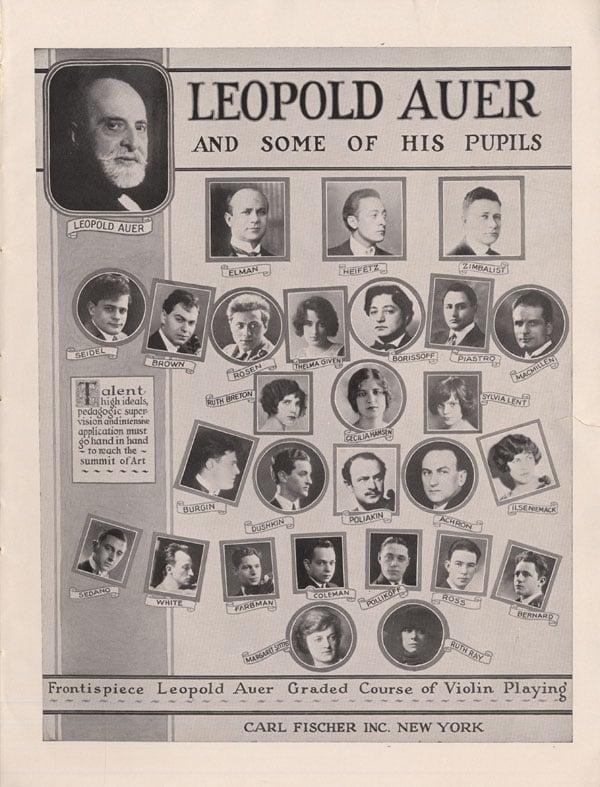
Leopold Auer used a Russian hold, similar to what we see from some of his students. You’ll read the opposite in places. Boris Schwarz wrote that Auer himself seems to have used a Franco-Belgian grip, and that claim gets repeated. I don’t agree with it.
The hold is tied to Auer’s circle in other accounts, too. William Primrose remembered it as the one “associated with the Auer pupils,” and very marked in Heifetz, with the stick lying between the second joint and the base knuckle of the first finger and the hand strongly pronated. Writing in The Strad, John Krakenberger says the Russian grip came from a loose hand, as Auer himself showed in his Violin School. Yankelevich adds a detail about Auer’s own hand: because his arms were short, he held the bow a little above the frog, with a straight or even concave thumb.
What makes Auer interesting is what he did with that. He never turned his own hand into a rule. Here he is in Violin Playing as I Teach It, from 1921, on the great violinists he had heard. This is the passage I wish everyone would read before asking me about their bow hold.
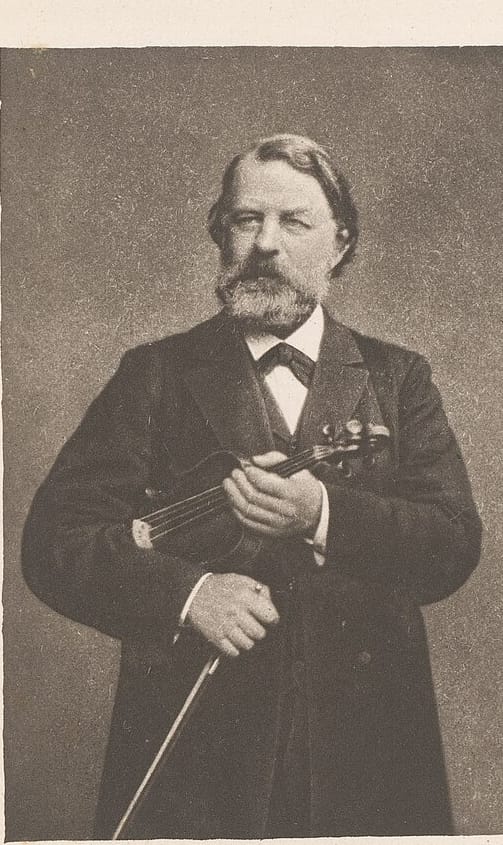
Joseph Joachim
First finger often in the air
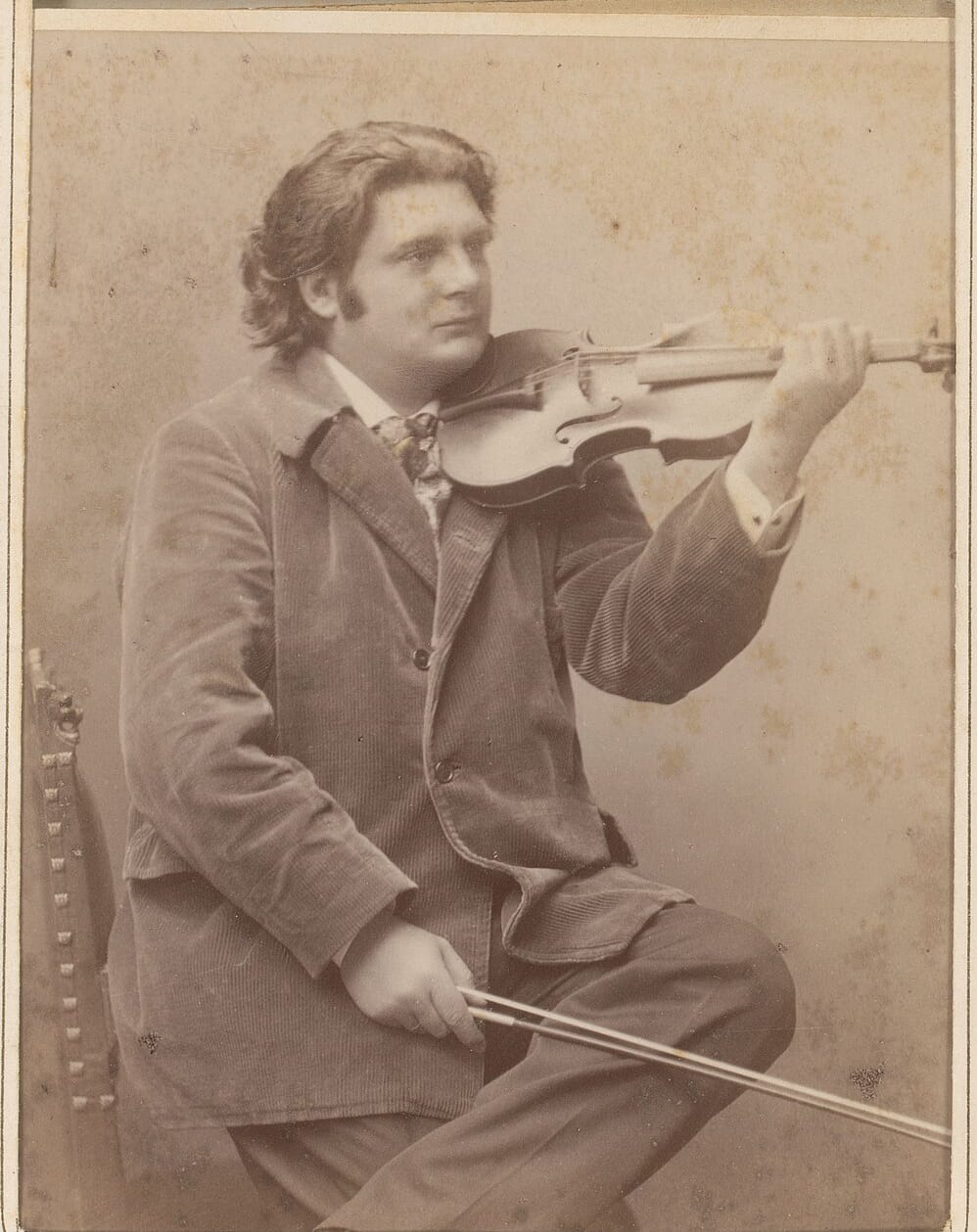
Eugène Ysaÿe
Little finger raised in the air
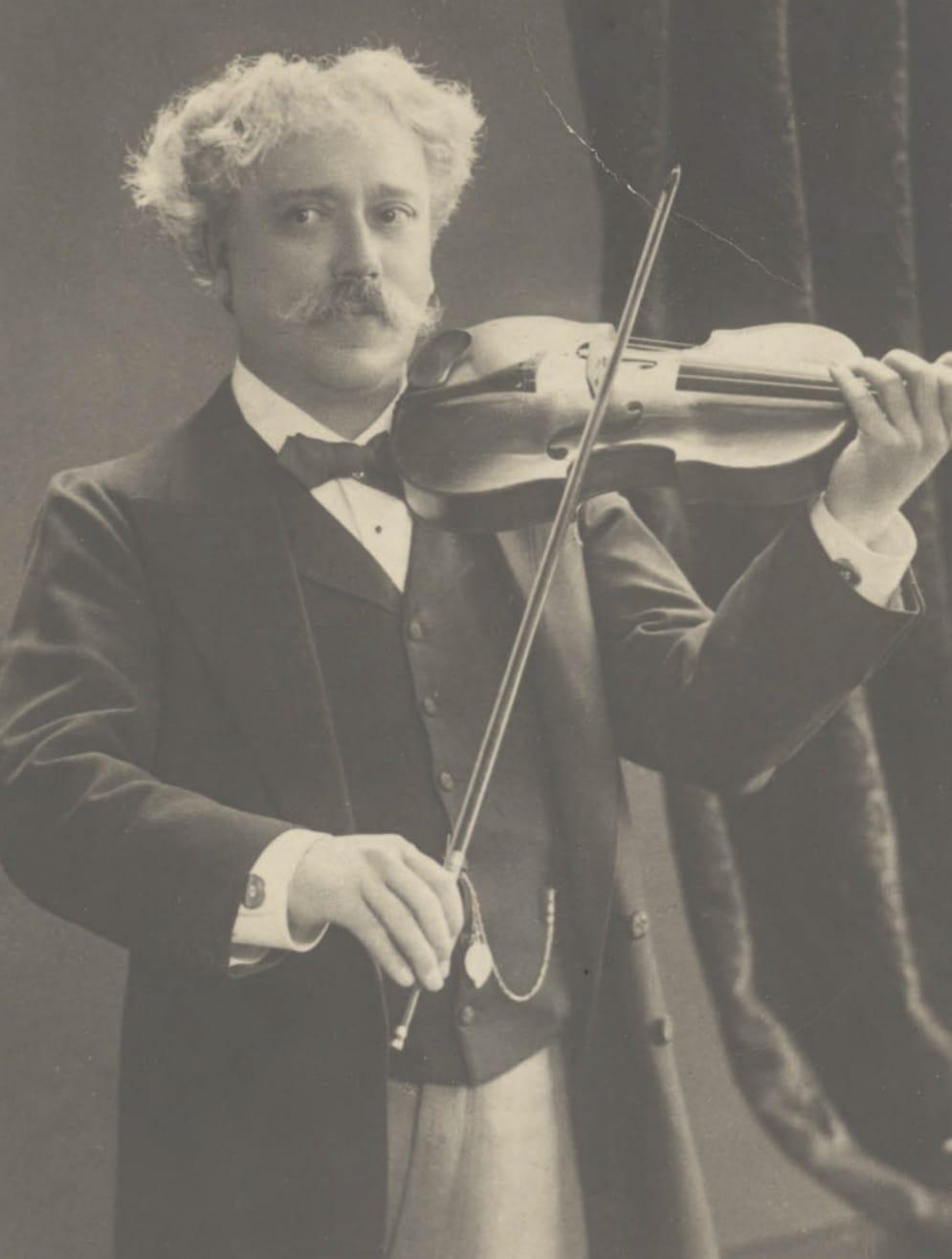
Pablo de Sarasate
All fingers on the stick
Three of the greatest violinists of the age, and three different hands. Auer’s conclusion is that each had a different arm, different muscles and different fingers. He says there can be “no exact and unalterable rule” about which fingers press the stick, and calls it “a purely individual matter.”
His students reflect that. Schwarz, quoted in the same book, says every Auer student was “virtually free to choose his own posture.” Some had a high elbow, some a low one, and some pressed the index finger above the second joint, others below it. Heifetz himself said he could never say what the so-called “Auer method” was.
Galamian says the hold should keep changing
Ivan Galamian comes at this from a different direction. His basic grip, which he calls the best for fullness and roundness of sound, is modest: curved fingers, nothing stiff, the thumb against the stick and frog, and not jammed into the cut-out. But he immediately says this isn’t a fixed thing. The hand should adapt as the bow moves and as dynamics and strokes change.
He gets specific. For a light, transparent sound, the first finger moves toward its base joint and the other fingers come slightly off the stick. For very broad, fast détaché, it’s useful to let the first finger contact the stick nearer the middle joint. It’s why the question “which hold do you use?” often doesn’t have a clean answer.
Galamian also makes the point that changes everything for a student thinking of switching. Early in his book, he says that a way of holding the bow brings with it a whole pattern in the fingers, hand, wrist and arm. If you change the grip, the rest has to change with it.
What I tell my students
The way it looks is one thing, but the way it feels is another thing. Have a sense of balance with the pinky and the thumb. As long as you feel this, and you don’t feel like you have to hold it, then that’s really the key.
 A short masterclass, if you’d rather see it than read it.Best Basic Violin Bow Hold
I mostly teach something that would be called Franco-Belgian, and when a student has a working hold, I almost never change it for the sake of a label. Recently a student asked how to classify their hold. I told them what those words usually mean, and then I told them what I actually care about.
I’ve taught the same picture to many students: a seesaw. The thumb is the fulcrum. The pinky is on one side and the index finger is on the other. In the air, and in the lower half of the bow, it’s the thumb and pinky in opposition. On the string, the index finger adds weight when you need it. The other two fingers are mostly rudders.
I don’t believe in pronation. I think that’s a confused concept. It’s a dynamic motion, it’s not just some doorknob thing.
I also have an opinion that some people won’t like. I don’t think you should get a big sound by rotating the whole forearm, like turning a doorknob. What adds weight is a small lean through the index finger, with the arm hanging.
Should you change your bow hold?
I asked Arco to go through my lessons for when I’ve told someone to change their hold, and I couldn’t have put its answer better: change the hold when a particular feature of it is demonstrably limiting the bow, and don’t change it merely to normalize its appearance.
If you take them away and the bow wants to fall, then they’re holding the bow. These three fingers really aren’t doing much when you’re at the frog. It’s thumb and pinky.
These checks come from my lessons and from Galamian, Flesch and Yankelevich. They’ll tell you more than the name of your hold.
- Take your fingers away. At the frog, take your middle fingers off the stick. If the bow wants to fall, they were holding it. The thumb and pinky should be able to do this job.
- Draw a long, slow bow. On an open string, go from frog to tip and back, and listen for where the sound breaks or thins. This is Galamian’s son filé. A rough sound doesn’t prove the grip is at fault, so check bow speed and sounding point too.
- Check both ends of the bow. If you can’t reach the tip without twisting your wrist, or the hand has crept so far up that you’re leaving bow unused at the frog, you’ve found a real limitation. Yankelevich warns that insisting on keeping the pinky on at the tip can force players with shorter arms into extreme wrist positions. Flesch warns that a rigid pinky can get in the way of the bow change.
- Compare soft and loud. A hand that works for a transparent sound may need to adjust for a broad, fast détaché. Galamian expects it to.
- Check your arm. Your arm has to match your hold. I recently told a student that what their arm was doing didn’t work with their hold. With a Russian hold, it would have been a different technique. They had a normal Franco-Belgian hand, so the arm needed to be much lower by the time they reached the A string. I told them not to change the hand.
If you do change something, keep the change as narrow as the problem, and then repeat the test that exposed it.
Who played which?
Be careful with lists of famous players. Flesch’s examples of the Russian hold were probably Heifetz and Elman. One modern guide lists Heifetz, Milstein, Oistrakh and Hilary Hahn as Russian, and Perlman, Zukerman and Shaham as Franco-Belgian. These are reasonable associations, but they’re made from watching people, and hands change over a career and within a phrase. Even Auer called it a problem “impossible of solution” to say exactly what these players’ fingers were doing at a given moment. I’d take that seriously.
Questions people ask
- What is the difference between the Russian and Franco-Belgian bow holds?
- The main difference is where the index finger meets the stick. In the Franco-Belgian hold, the contact is a little below the middle joint, with rounded, springy fingers. In the Russian hold, the finger sits deeper, above that joint, usually with a higher arm and more pronation.
- Did Leopold Auer use the Russian bow hold?
- Yes. Auer used a Russian hold, similar to what we see from some of his students, though Boris Schwarz wrote otherwise. Auer didn’t make it a rule. He wrote that no exact rule could be given, and his students varied.
- Which bow hold is best?
- The one that lets your hand balance the bow without gripping, and gives you the sound you want across the whole bow. Flesch usually left the choice between Russian and Franco-Belgian to the student, and Galamian expected the grip to change with the music.
- What bow hold did Heifetz use?
- Heifetz is the most common example of the Russian hold. William Primrose described his hold as lying between the second joint and the base knuckle of the first finger, with the hand strongly pronated.
- Should I change my bow hold?
- Only when a particular feature of it is limiting your bow, such as leaving bow unused at the frog, or being unable to reach the tip freely. Check bow speed, sounding point and your arm first, because they can look like a grip problem.
Sources
- Notes from Daniel Kurganov’s Lessons in Arco.
- Leopold Auer, Violin Playing as I Teach It (1921), Chapter II, “The Bow.”
- Carl Flesch, Problems of Tone Production in Violin Playing, Chapter V, and The Art of Violin Playing, Book I.
- Ivan Galamian, Principles of Violin Playing and Teaching (1962), Chapter Three, “Holding the Bow.”
- The Russian Violin School: The Legacy of Yuri Yankelevich, including its introduction, quoting Boris Schwarz.
- John Krakenberger, “Bow hold: Gripping times”, The Strad, February 2003, quoting William Primrose.
- Daniel Kurganov, “Best Basic Violin Bow Hold”, YouTube.
How this was made
Researched with Arco’s expert knowledge, then checked against the original texts.
Pictures: George Grantham Bain Collection, Leopold Auer, public domain, via Wikimedia Commons; Bain News Service, Carl Flesch, public domain, via Wikimedia Commons; Leopold Auer and pupils, Graded Course of Violin Playing, 1926, public domain, via Wikimedia Commons; Rijksmuseum, Portret van Joseph Joachim met viool, c. 1875–90, CC0, via Wikimedia Commons; Rijksmuseum, Portret van Eugène Ysaÿe, 1898, CC0, via Wikimedia Commons; Pablo de Sarasate, 1905, public domain, via Wikimedia Commons.
Keep reading
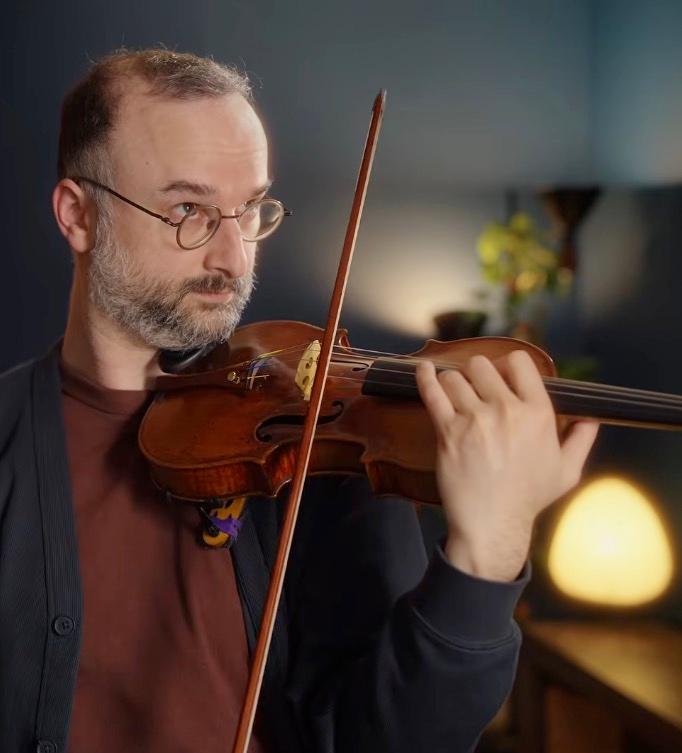


I researched this article the way I’d research any question about my own students: with Arco, which answers from every lesson you’ve ever had and from expert knowledge, side by side.
Start Free