Fix your intonation in a week
Intonation is mostly a listening problem, not a strength problem. Between in tune and out of tune is a millimeter, and it takes no extra strength to move a finger a millimeter. So if you change how you listen and measure, your intonation can change quickly. The best exercise I know for this is a set of double stop patterns in Ševčík Op. 1.

Daniel Kurganov, violinist and teacher
October 31, 2026 · 9 min read
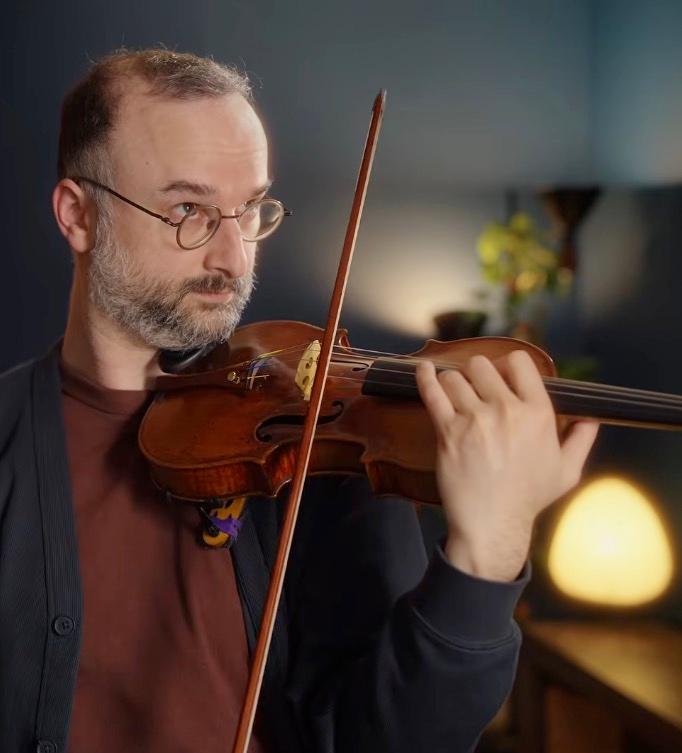
I made a video about this for my Best Practice masterclass series, and it now has about 182,000 views. This article covers what’s in it and what I’ve learned since then, from the lessons I’ve taught and from going back to what other teachers wrote.
The three parts of intonation
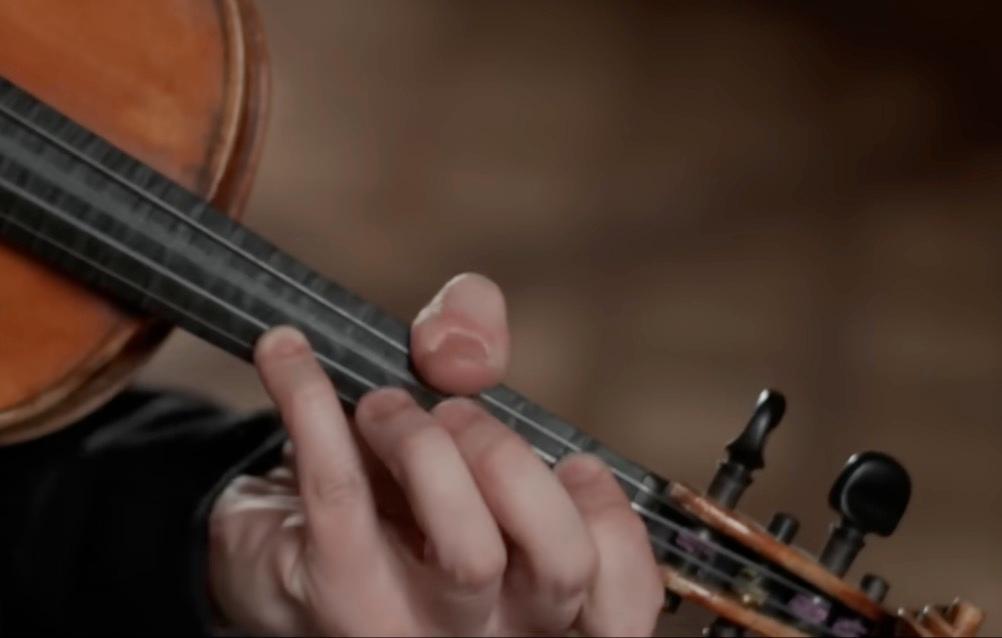
Your intonation comes down to three things: the frame of your hand, your conception of the intervals (how wide a whole step is, how tight a half step is), and your shifts. This article is about the first two. If you have those, you have most of what you need to play in tune.
We see six sharps and we’re lost. But in reality, I think nature doesn’t care whether the frame is here or there. Thinking in terms of intervals rather than geography of the fingerboard can be helpful.
Dexterity is physical. You need many repetitions to build clear articulation without tension. Intonation is different. There’s no particular strength involved in a good note versus a bad one. I tell my students that nature doesn’t discriminate. It doesn’t care whether your finger is a millimeter this way or a millimeter that way. So this is less about training a muscle than about learning to notice.
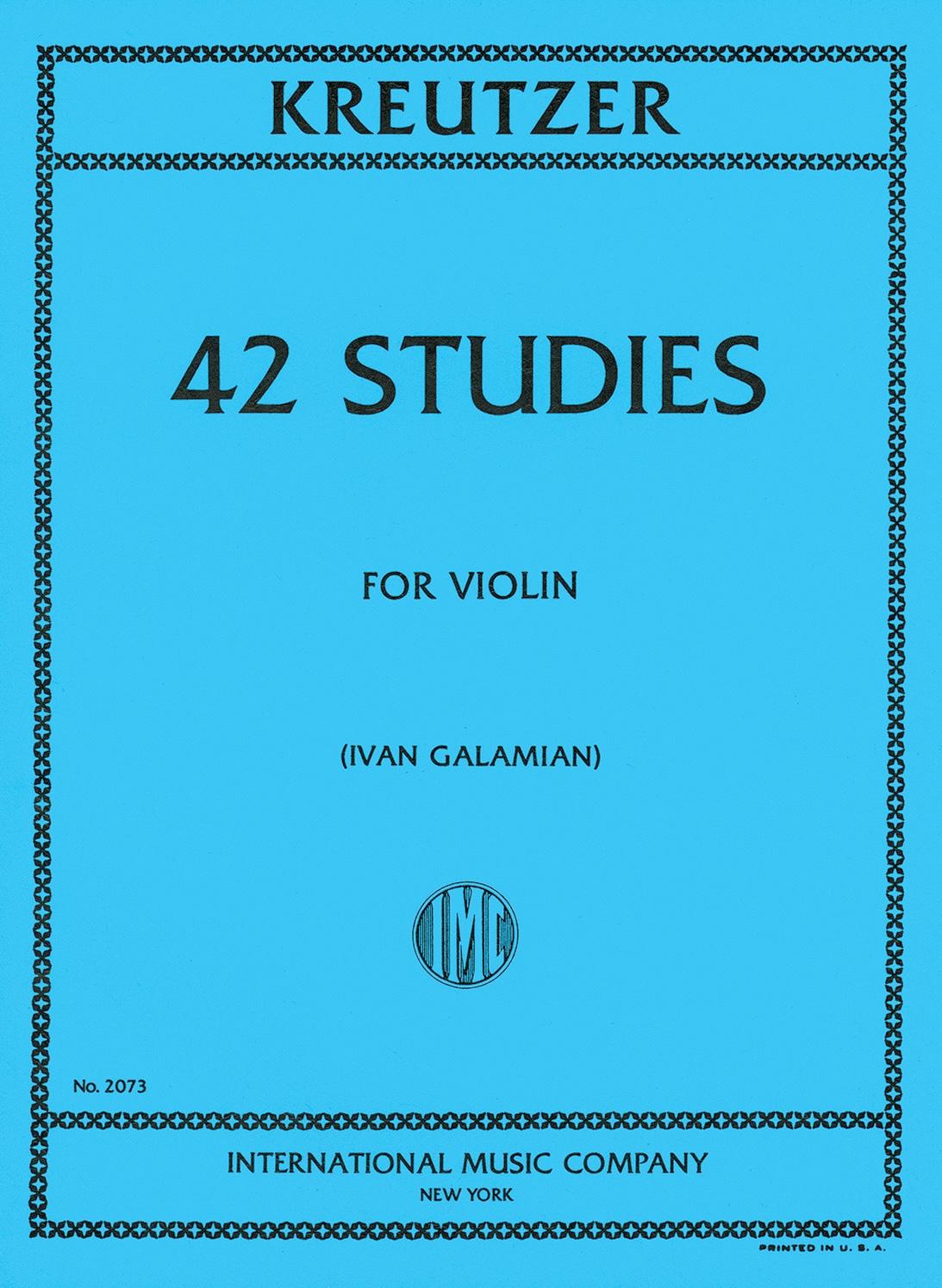
Other teachers describe this in a compatible way. Ivan Galamian writes that intonation rests on touch guided by the ear: the hand finds its place by the feel of the neck, the fingers learn their spacing, and the ear keeps correcting them. He builds this around the octave frame between the first and fourth fingers, with the second and third fitting inside it. Yuri Yankelevich puts the ear first, saying that it determines accurate intonation and must guide the hand. Their emphasis differs, but they agree that good intonation is a relationship between the ear and the hand.
The exercise
The exercises are in Otakar Ševčík’s School of Violin Technique, Op. 1. Look at Book 1, Nos. 24, 25 and 26, and Book 2, Nos. 10, 19 and 28. They’re double stop patterns in one position, strung together with a continuous sound. They start simply and get complicated, with jumps, finger independence work, plenty of keys and the occasional surprisingly beautiful moment.
What I love is that they make you constantly recalibrate the frame of your hand. Each bar forces your fingers into a new relationship. It works something like braces on your teeth, only much faster. Ševčík often seems to be teaching you how to practice, too: many of these patterns look like something he invented to fix one double stop or one weak finger, then wrote down.
How to practice it
You have to practice slow enough where you can predict where the next finger should be. Should it be on the higher side or the lower side?
The way you do this matters more than the notes. Here is what I show in the video.
- Ignore the printed bowings at first. Use two beats per bow, or even one beat per bow, so you can play slowly and listen without anxiety. Keep the sound clean and continuous. Think of how you tune your violin: you don’t do it with choppy little bows.
- Move your fingers slowly. Feel how tight the half step is and how wide the whole step is. Forget about the rhythm for now. Articulate with energy only after you’ve found what’s in tune, because drilling too early just rehearses a guess.
- Repeat each bar, then loop two beats. Each time should be calmer and more premeditated than the last. Listen for the beats between the notes, and check against open strings.
- Decide your maximum finger pressure. Before you begin, choose how hard you’re allowed to press, and don’t go beyond it. When something is hard to reach, your instinct will be to press. Adjust your hand, your fingers or your arm instead.
- Put open strings between jumps. On jumps across strings, playing an open string between the notes takes away the pressure and lets you work on a quick, light motion. Then take the open strings away.
- Add a little vibrato. Where you can, vibrate gently. It’s a good test of whether your hand is relaxed, or whether you are holding the shape by force.
- Sight-read a random page. Once you’ve warmed up, open to any page. These exercises are hypnotic and hard to memorize, so you’re testing how quickly you can recognize the patterns.
Look for your two tendencies
Now intonation also. Some of these half steps are not tight enough.
After a while, you’ll start noticing that the out-of-tune spots have a pattern. This is the most useful thing you’ll get from the exercise. Passages that seem to have random problems usually have just one or two habits underneath. The most common is that half steps aren’t tight enough and whole steps aren’t wide enough. Another is that your first finger slides around because of what your other fingers are doing. A very common one is the low second finger creeping up.
When you miss, name the miss. I don’t find it useful when a student says a passage is “75% in tune.” Is that note sharp or flat? Is it one finger, or is your whole hand sitting in the wrong place? If it’s the hand, moving one finger only hides it. Then fix it on the next attempt, and don’t slide around after you land. Sliding into the right note feels like success, but it teaches your hand nothing about where the note was.
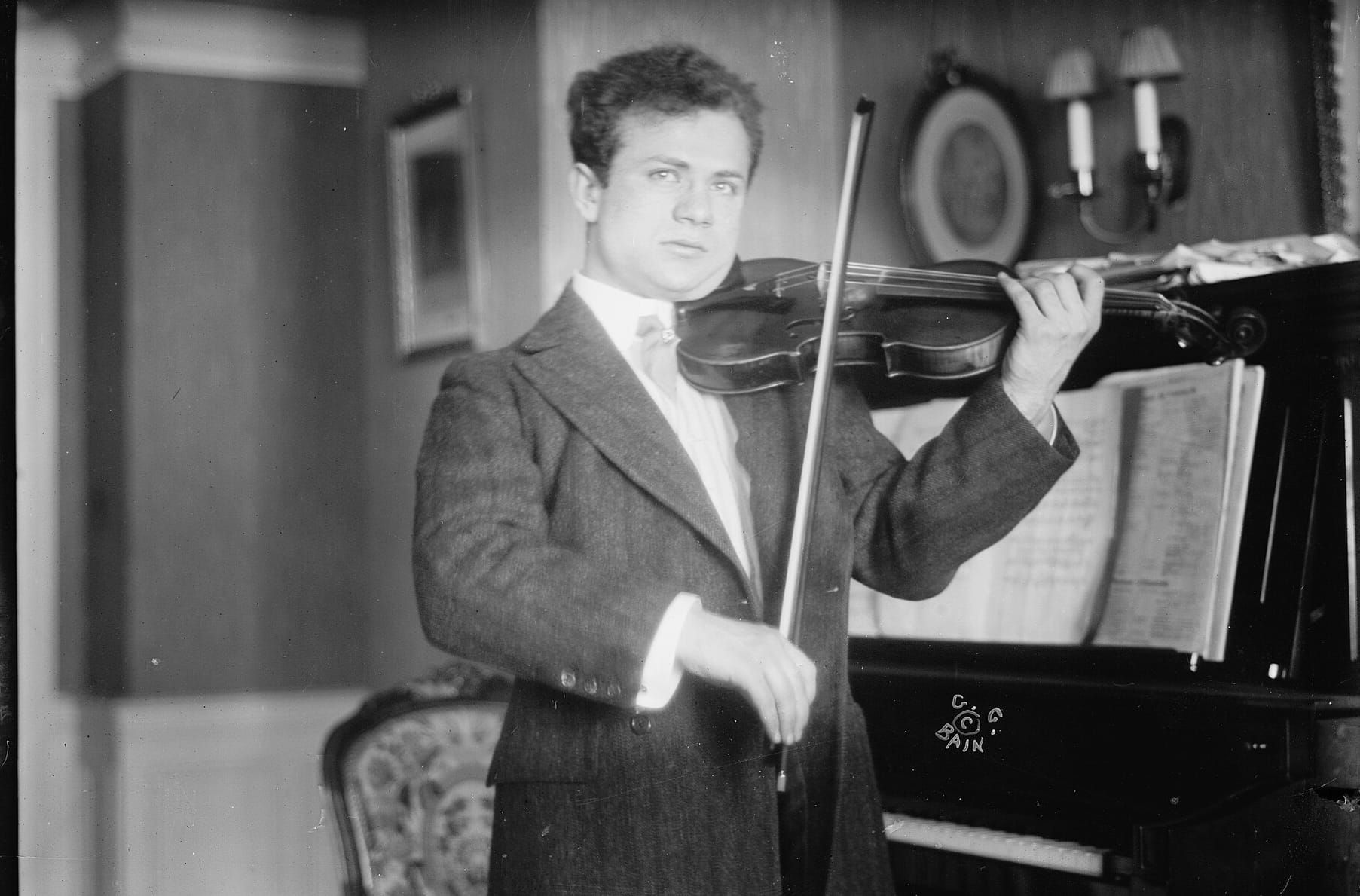
Yankelevich takes a strong position on this, and he disagrees with Carl Flesch to do it. Flesch recommended lengthening the arrival note of a shift so that you could check and correct it. Yankelevich argues this doesn’t build a reflex for the distance, and that you should repeat the whole movement until it arrives accurately.
When it isn’t the fingers at all
It’s your bow, not the left hand. Half of the time it’s just your bow. How do you hear the intonation? Move the bow.
Sometimes the left hand is innocent. This is one of the more surprising results from counting what I say in lessons: students often raise a left-hand problem, and we end up fixing the bow.
If the sound under a note is unstable, you can’t hear its pitch clearly, so you start to doubt a finger that was fine. A sounding point that is too close to the fingerboard can even change the pitch you hear. Tempo can outrun your ear too. If a passage is a blur, you’re not checking anything. And vibrato can hide the pitch, so try arriving on the note and letting it settle before the vibrato grows.
Train your ear to hear the instrument ring
I can tell you from experience that you can go a long way without this. I was a fairly well-developed violinist before I worked on intonation systematically. I cared about it, but I wasn’t always listening for how the instrument itself vibrates, and that puts a ceiling on how accurate you can get. Many players hit that ceiling.
The point of the drone is to give you some information, and then you don’t need the drone anymore. If you need the drone every time, it’s not working.
Here’s the idea. When certain notes are truly in tune, the violin rings, because the open strings vibrate in sympathy. When the note is off, the ring goes away. At first, you’ll have to stop and check. Over time, you stop needing to stop, and you can hear the difference in the moment. Drones can help with this, but they should be temporary.
There isn’t one correct pitch
One warning, so that double stops don’t mislead you. Melody and harmony want different things. If you tune a double stop so that it rings, that’s in tune as a double stop. But in a melody, a note pulling toward its resolution usually needs to be placed differently. A leading tone goes higher. A minor third in the bass may sit lower. Sometimes a note that is correct in a scale will sound wrong if you check it against a note you just played.
Galamian says no violinist can play according to a mathematical formula, and that you can only follow the judgment of your own ear, adjusted to whatever you’re playing with. So don’t turn a tuner into your teacher. The question is always this: am I tuning this note as part of a melody, or as part of a chord?
A week with this exercise
That takes a little time, like one minute on each of these little exercises that we make up, and it makes a big difference.
In the video I say to try this for a week or two. A week won’t finish your intonation. It can change how you hear, and that’s what makes everything after it easier. The only timing I’ve actually given students for this kind of work is about a minute on each small interval or position change, going back and forth.
| When | What Arco suggested | What you’re listening for |
|---|---|---|
| Day 1 | Book 1, No. 24, in short sections. Find the hand frame, then repeat with an even bow. | Beating or roughness, as information and not a cue to press |
| Day 2 | No. 25, then alternate short sections of it with No. 24. | Whether the same adjustment helps in both |
| Day 3 | No. 26, then go back to a section of No. 25 that was hard. | Whether your adjustment is repeatable |
| Day 4 | Book 2, No. 10, then a passage you already know from No. 26. | Whether you can hear an error sooner |
| Day 5 | Book 2, No. 19, with a simple rhythmic variation, as Galamian recommends for double stops. | Fast finger adjustments that keep the interval |
| Day 6 | Book 2, No. 28, then No. 19, then one passage from Book 1. | Whether you recognize your tendency earlier |
| Day 7 | About three minutes on each of the six, then compare with your first attempts. | Whether you can adjust without tightening |
The last step is the point. In the video, I play some Bach, which sounds nothing like Ševčík until you take away the rhythm and the life and the joy. Then it’s the same material: fingers jumping across fifths, one finger sliding while another stays. Once you see that, you can make these exercises out of your own music.
Questions people ask
- How can I improve my violin intonation quickly?
- Slow down and listen for intervals instead of individual notes. Practice double stop patterns, such as Ševčík Op. 1, Book 1, Nos. 24–26, with a continuous sound. Learn your own habits, which are usually half steps that aren’t tight enough and whole steps that aren’t wide enough.
- Why is my violin intonation so inconsistent?
- Usually the frame of the hand changes from note to note, you’re not hearing the interval before you play it, or you’re sliding to correct after you land. Sometimes the bow is the cause, because an unstable sound makes pitch hard to judge.
- Does using a tuner help violin intonation?
- A tuner can’t teach you where a note belongs in a melody or a chord. Open strings and the ring of the instrument are better training. Drones help too, but they should be temporary.
- Which Ševčík exercises are best for intonation?
- I use Opus 1, Book 1, Nos. 24, 25 and 26, and Book 2, Nos. 10, 19 and 28. They are double stop patterns in one position that force you to keep recalibrating the frame of your hand.
- Can you really fix your intonation in a week?
- You can change how you listen in a week, and that often makes an audible difference. Lasting accuracy takes longer, because you are building new habits in your hand and your ear.
Sources
- Notes from Daniel Kurganov’s Lessons in Arco.
- Daniel Kurganov, “Fix your intonation in a week”, YouTube.
- Otakar Ševčík, School of Violin Technique, Op. 1, Books 1 and 2.
- Ivan Galamian, Principles of Violin Playing and Teaching (1962), “Intonation,” Chapter Two.
- The Russian Violin School: The Legacy of Yuri Yankelevich, on shifting, discussing Carl Flesch and Konstantin Mostras.
How this was made
Researched with Arco’s expert knowledge, then checked against the original texts.
Keep reading
Your intonation habits are easiest to see across months of lessons. Arco keeps them all, and you can ask what keeps coming up.
Start Free